
Carpal flexion contracture in dogs is a disorder that causes the front joint to remain bent abnormally, hindering normal support of the limb. It can appear after injuries, prolonged immobilization, neurological problems or muscle and tendon sequelae. Early detection is important to avoid compensation, overload and worsening mobility.
In some cases, the leg remains flexed even when walking or standing. In other cases, the dog may be poorly supported, partially dragging the limb or avoiding proper weight bearing. Although each case must be evaluated individually, understanding what happens in carpal flexion contracture in dogs helps to make better decisions together with the veterinarian.
What is carpal flexion contracture in dogs?
Flexion contracture of the carpus in dogs occurs when the carpal joint cannot extend normally and is held in a flexed position. This may be due to a shortening or retraction of soft tissues, a neuromuscular disorder or a lack of functionality of the structures that allow the limb to extend.
The result is an abnormal posture of the foreleg, which can affect support, stability and gait. In more marked cases, the limb does not work in a functional range and the dog compensates with shoulder, elbow or the other foreleg.
Main causes of carpal flexion contracture in dogs
Carpal flexion contracture in dogs does not have a single cause. It is usually the consequence of a previous problem that alters muscles, tendons, nerves or joints.
- Neurological lesions affecting extension of the limb
- Prolonged immobilization after surgery or trauma
- Retraction of tendons or soft tissues
- Sequelae after fractures or blows
- Maintained muscle weakness
- Internal scars or adhesions
The carpus is an anatomically complex area, made up of multiple bones, ligaments, and supporting structures that must work in coordination. If you want to consult an external anatomical reference, you can view this resource: anatomy of the canine carpus.
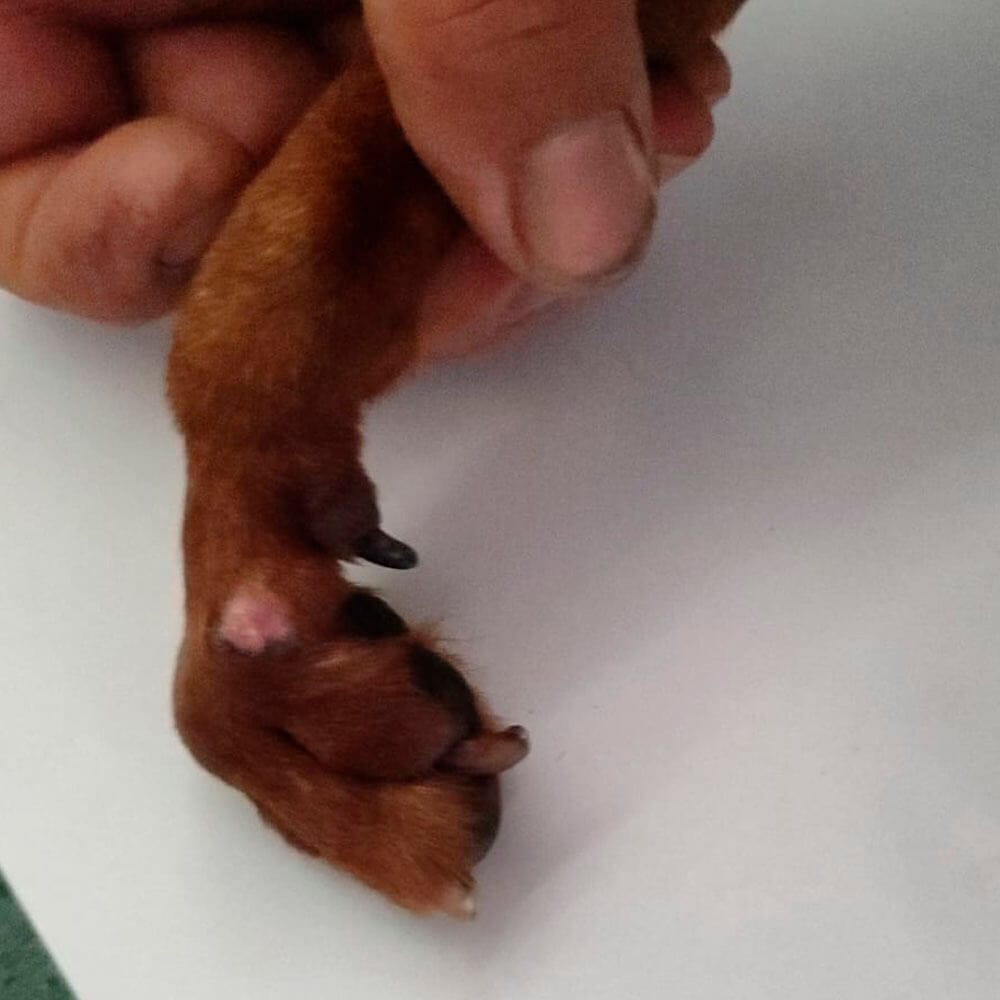 Contracture in flexion of the carpus in dogs.
Common symptoms
Signs may vary according to the severity, the origin of the problem and the time of evolution. Even so, there are several signs that may lead to suspect carpal flexion contracture in dogs.
- Front leg bent downward or inward
- Difficulty extending the joint
- Incorrect or unstable support
- Altered gait or partial dragging
- Overloading of the other extremity
- Visible stiffness at rest or when walking
In some dogs, the problem is clearly visible when standing still. In others, it is detected mainly during walking or in moments of fatigue.
How it is diagnosed
Diagnosis of carpal flexion contracture in dogs should be made by a veterinarian. The clinical examination allows to assess the range of motion, the degree of stiffness, the posture of the limb and if there is pain, weakness or neurological involvement.
Depending on the case, complementary tests such as X-rays, neurological studies or rehabilitation assessment may be necessary. The goal is to identify the cause and define whether treatment should focus on rehabilitation, external support, pain control or a combination of several measures.
Can a splint help?
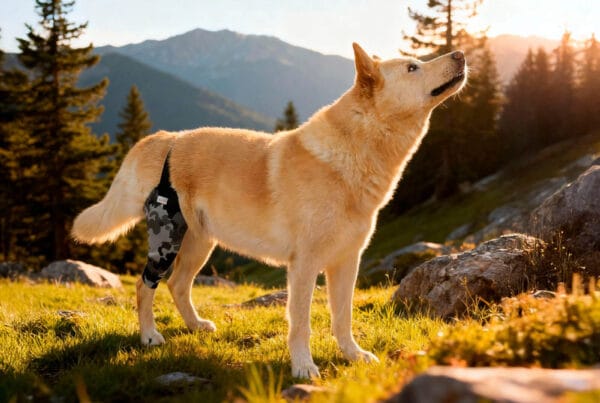
In certain cases, a splint can be a useful aid in the management of carpal flexion contracture in dogs. It is not a substitute for veterinary assessment, nor does it work the same for all patients, but it can help maintain a more functional joint position and improve day-to-day support.
A well-planned splint can help:
- External joint support
- Increased stability during support
- Control of forced positions
- Helps to maintain a more functional alignment
- Complement to rehabilitation work
At Mihapi we work with support solutions adapted to different needs, always assessing whether the case fits better with a technical sizing system or with a customized splint.
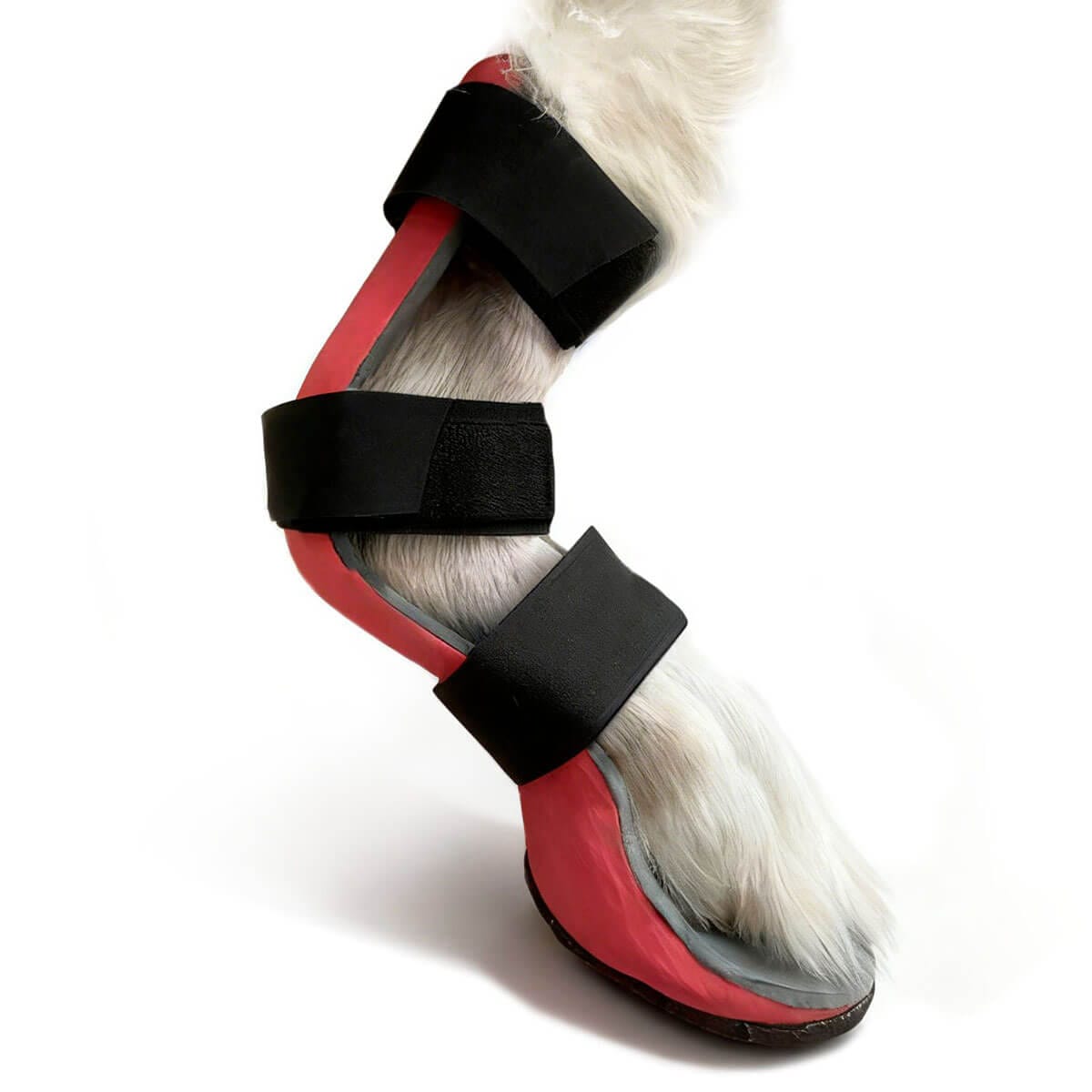 Orthopedic splint made to measure according to the customer’s mold or indications for a perfect fit.
What to consider before using a brace
Not all carpal disorders require the same approach. Before choosing a support, several points should be considered:
- Whether the problem is joint, muscle, tendon or neurological
- The degree of existing rigidity
- If there is pain or inflammation
- The dog’s actual ability to support
- Whether the objective is to stabilize, accompany or limit movement
That is why it is so important to measure well and define correctly which type of splint can fit best. Here you can find more information:
Differences with other carpal problems
Contracture in flexion of the carpus in dogs is not the same as hyperextension. In hyperextension, the joint collapses downward due to excessive opening or loss of support. In flexion contracture, the opposite occurs: the joint is closed or bent in a sustained manner and does not extend normally.
If you want to better understand this difference, you can also read this related article: carpal hyperextension in dogs.
When to consult
If you notice that your dog has a bent front leg, poor support or seems unable to extend the carpus normally, it is advisable to consult a veterinarian as soon as possible. The sooner a carpal flexion contracture in dogs is assessed, the easier it is to define an appropriate management plan.
Each dog presents a different situation. In some cases the approach will include physical therapy and mobility control. In others, a splint may be part of the daily functional support.
Conclusion
Flexion contracture of the carpus in dogs is a problem that can significantly affect walking, support and general balance of the animal. Understanding its causes, differentiating it from other carpal pathologies and assessing whether an external support can help is key to better accompany the dog in its recovery or functional management.
If you are considering a splint for your dog, it is important to start with a good measurement and a suitable indication for your dog’s specific case.
This content is informative and is not a substitute for a veterinarian’s assessment.
Related post
- Carpal hyperextension in dogs
- How to take correct measurements for a splint in dogs
- Custom dog splinting vs. technical sizing