

One of the most common questions when a dog starts wearing an orthopedic splint is: whether a dog can sleep in a splint or if it is better to remove the splint at night. The answer depends on the type of injury, the design of the splint and the veterinarian’s recommendation.
In many cases, splints are used primarily during the day to stabilize the joint while the dog is walking or moving. During nighttime rest, some veterinarians recommend removing them to allow the skin to breathe and avoid chafing or continued pressure. However, there are situations when it may be necessary for the dog to sleep with it.
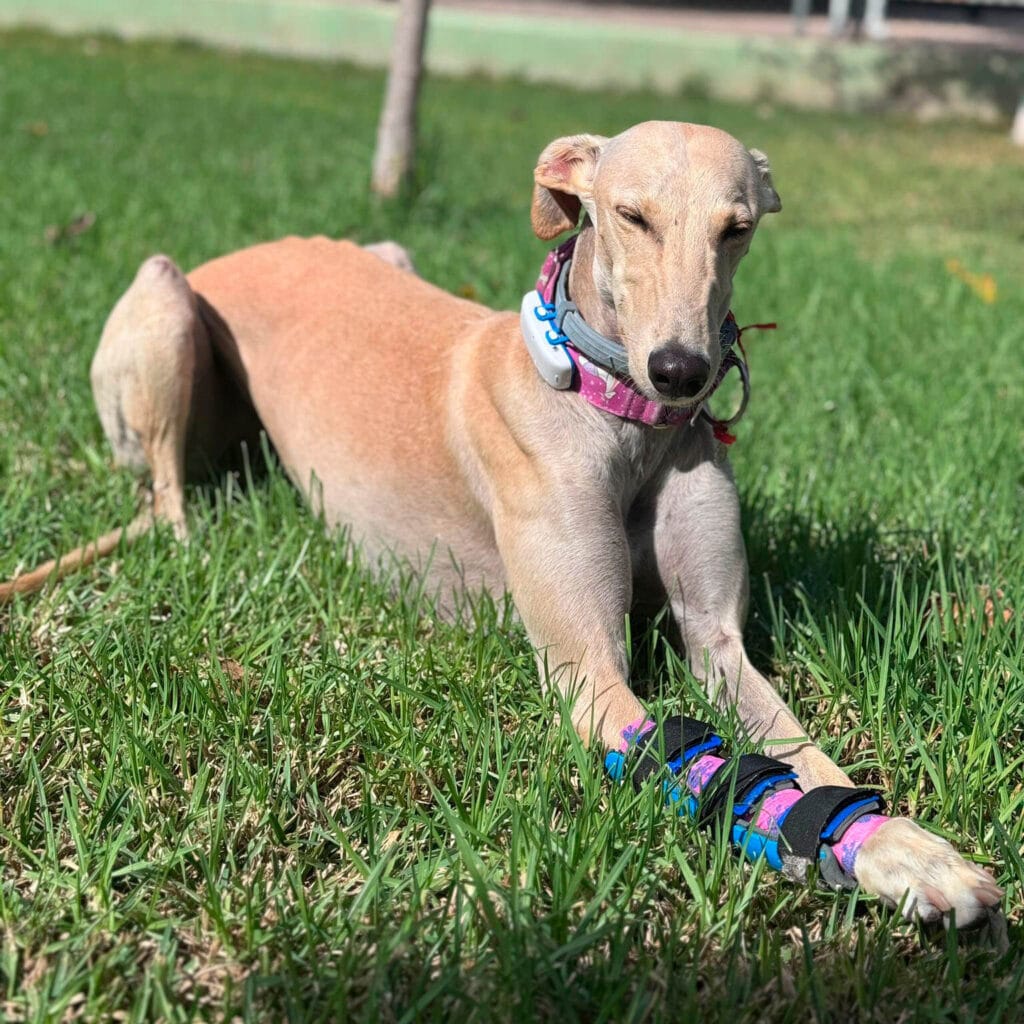 Dog with a carpal splint stabilizing the front joint.
When can a dog sleep in a splint?
In certain pathologies it is possible that a dog with a splint can sleep with it, especially when it is necessary to keep the joint completely stabilized. This occurs for example in:
- Fractures or fissures in recovery.
- Severe instability of the carpus or tarsus.
- Neurological problems affecting limb support.
In these cases, the veterinarian may recommend wearing the brace for longer continuous periods, always monitoring the condition of the skin and the fit of the device. Unless specifically advised otherwise, many dogs rest better without the brace at night.
When is it best to remove the splint at night?
In other situations, especially when the splint is used as a support during movement, it may be advisable to remove it before sleep.
This allows:
- Reduce the risk of skin irritation.
- Avoid prolonged pressure on the support points.
- Allow the limb to rest.
If you decide to remove it, it is important that the dog remains at rest and in a safe space to avoid sudden movements during the night.
Tips if your dog sleeps in a splint
If your veterinarian has indicated that your dog can sleep with a brace, it’s advisable to follow some basic recommendations:
1. Check the skin every day
Check for redness, swelling or sores.
2. Use a soft bed
A soft surface reduces pressure on the joint.
3. Tighten the Velcro tightly
The splint should support without compressing the limb.
4. Keep it dry and clean
Moisture may promote irritation or infection.
The role of orthopedic splints
Braces help stabilize joints such as the carpus or tarsus, limiting movements that could worsen an injury.
In cases of ligament weakness, hyperextension or recovery from trauma, a well-fitted splint can improve stability during gait and promote recovery.
If you are considering a support option for your dog, you can see examples such as the rear splint for dogs or the tarsal splint.
También conviene observar si el perro intenta morder la férula, se muestra incómodo o cambia de postura constantemente al descansar. Si tienes dudas sobre si puede dormir un perro con férula en tu caso concreto, lo más recomendable es consultar con el veterinario que sigue la lesión. Cada perro, cada patología y cada fase de recuperación pueden requerir pautas diferentes sobre el uso continuo de la férula.
During the first days of use it is normal to observe how the dog adapts to the brace also during rest. Some dogs sleep normally from the beginning, while others need a short period of adaptation until they feel comfortable with the brace.
Conclusion
So, can a dog sleep in a splint? Yes, but it depends on the specific case. In some injuries it is advisable to keep it overnight, while in other situations it is better to remove it so that the limb can rest.
When in doubt, the most important thing is to always follow your veterinarian’s recommendation and regularly check the condition of your dog’s skin and comfort.
This content is informative and is not a substitute for a veterinarian’s assessment.