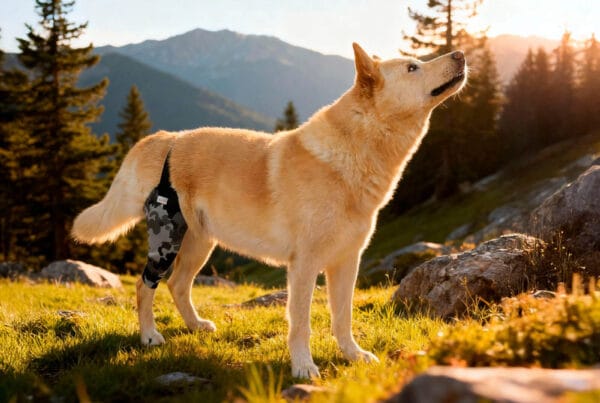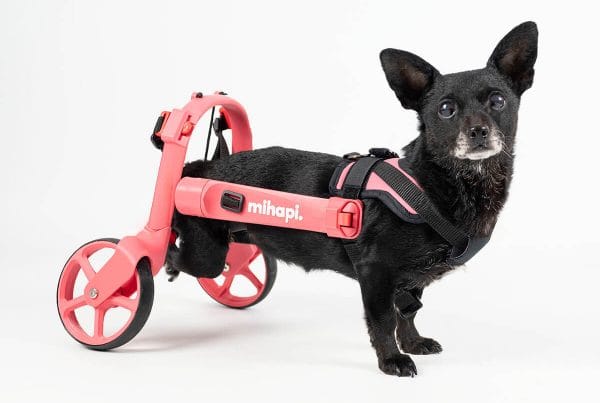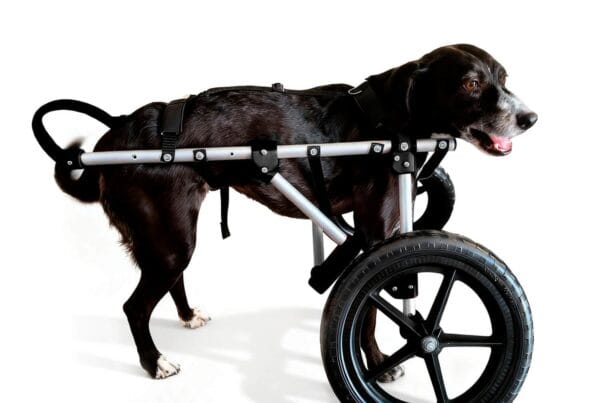

Carpal hyperextension in dogs is a joint disorder that causes the dog’s wrist to collapse downward when the limb is supported. This pathology generates instability, progressive pain and difficulty walking if not treated properly.
In some cases it appears abruptly after trauma. In others, it evolves progressively, generating carpal weakness and carpal instability that worsens with time.
Understanding what is really happening in the joint is key to making the right decisions and correctly accompanying the dog.
What exactly is carpal hyperextension in dogs?
Carpal hyperextension in dogs, also known as carpal collapse or carpal instability, occurs when the ligaments and supporting structures of the joint lose their ability to maintain the normal physiological angle. As a consequence, the carpus falls towards the ground when supporting weight, generating an abnormal posture and progressive weakness of the carpus.
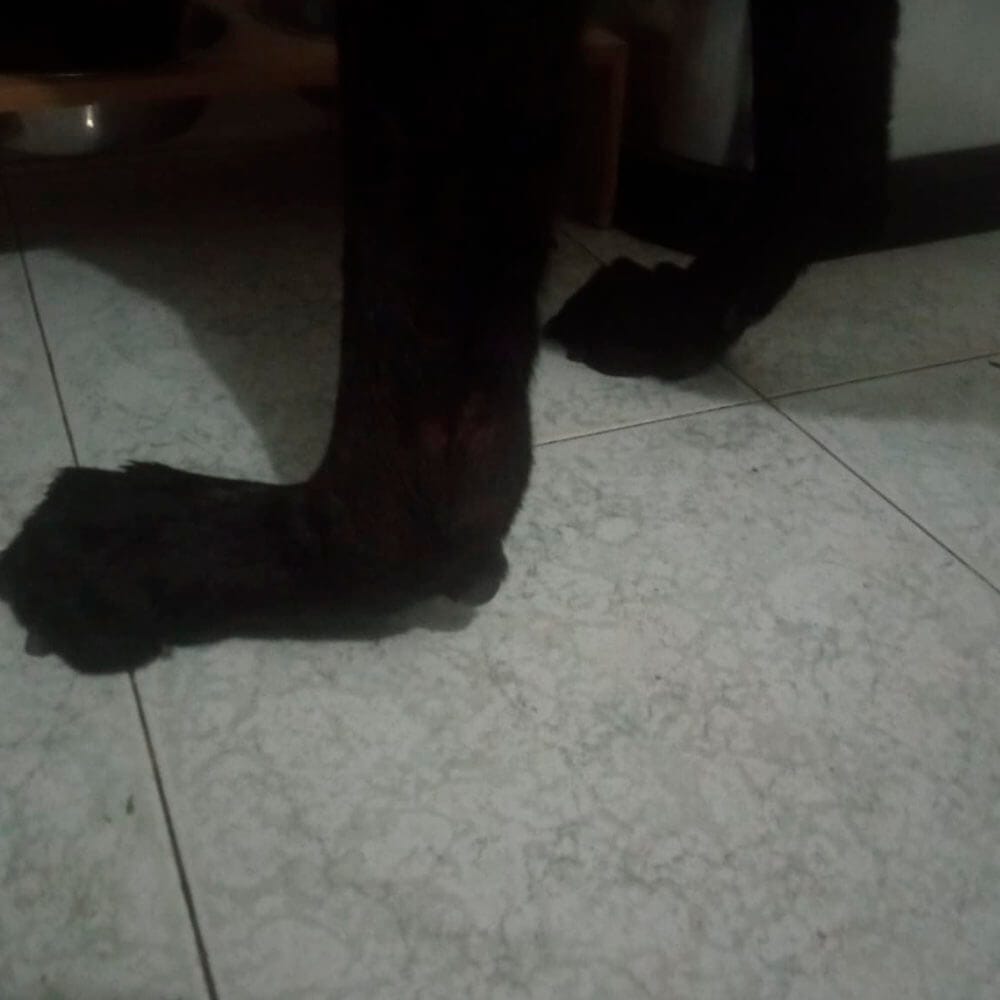
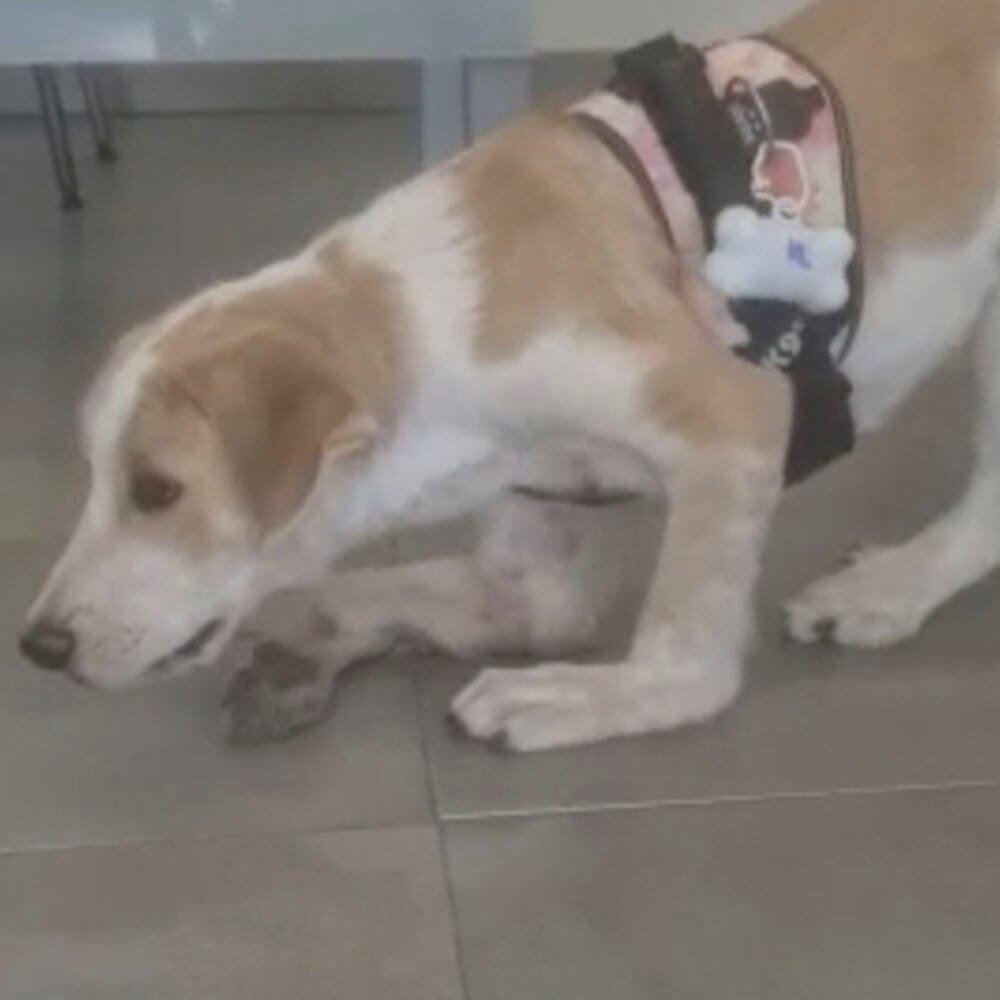
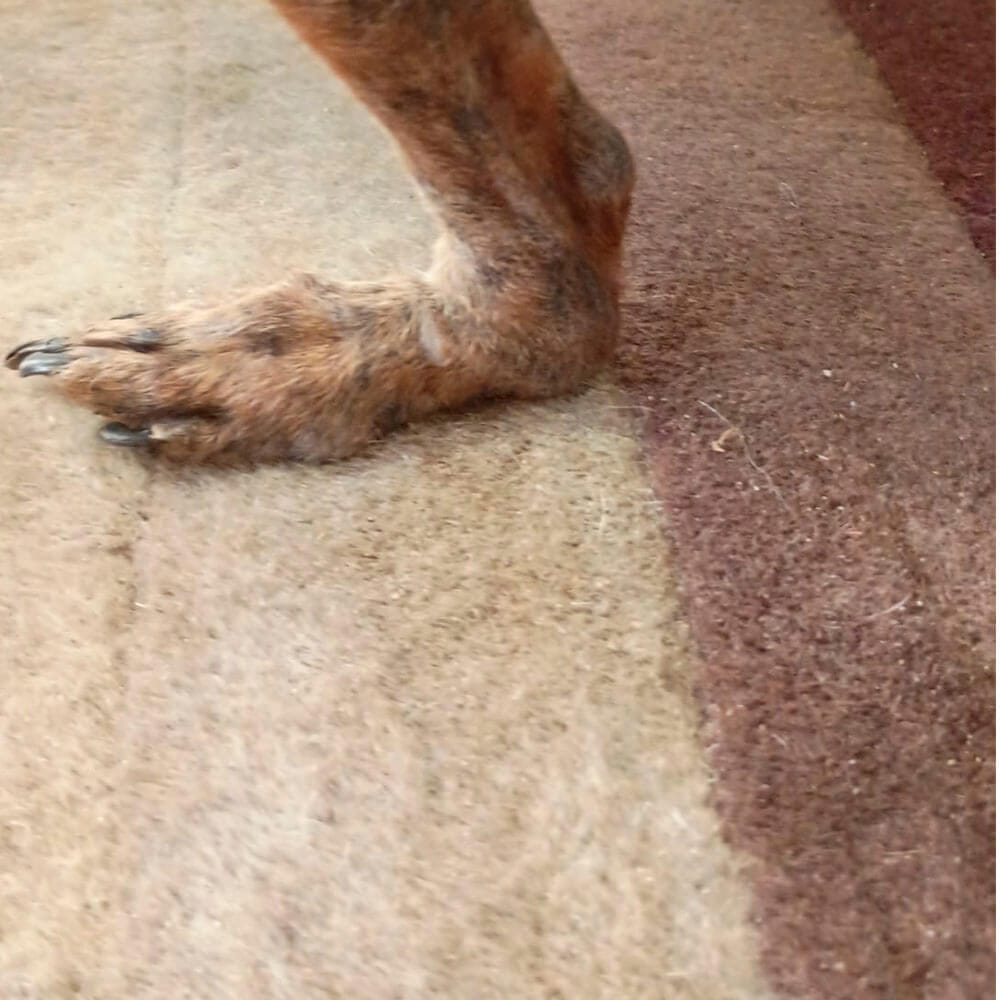
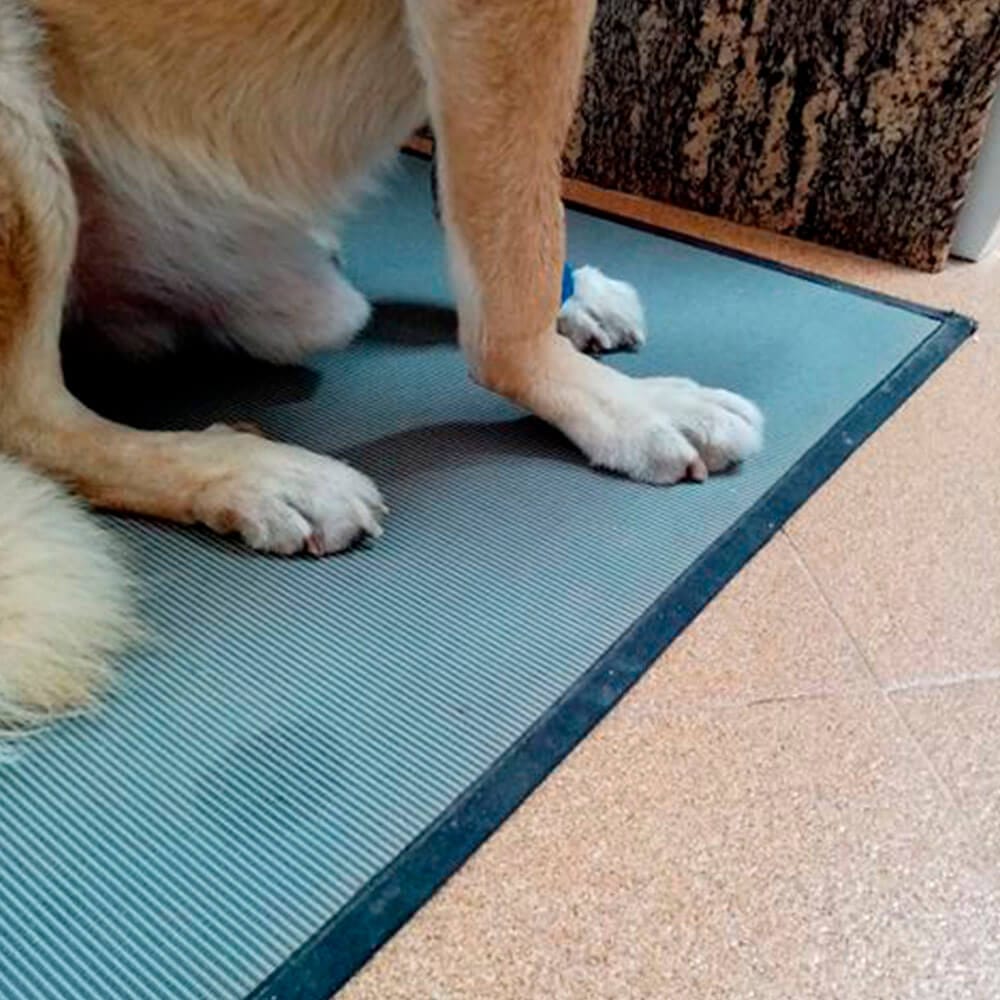
Real examples of carpal hyperextension without severe deformity.
Carpus = “wrist”.
The carpus is the set of bones and ligaments that form the intermediate joint of the forelimb, functionally equivalent to our wrist, but anatomically more complex (see anatomical definition here).
It is composed of:
Multiple small bones.
Dorsal and palmar ligaments.
Flexor and extensor tendons.
Joint capsule.
When these tissues are damaged or weakened, what many describe as “carpal collapse in dogs” occurs.
What happens biomechanically?
Under normal conditions, the carpus:
Supports the weight of the anterior train.
Absorbs impact.
Maintains alignment during support.
In hyperextension:
The carpal angle increases.
The joint yields to the ground.
Carpal instability occurs.
The support is no longer firm.
The result is an altered gait pattern and, in advanced cases, pain or overload in other structures.
Most common causes of carpal hyperextension in dogs
Carpal hyperextension in dogs does not have a single cause. It can appear for different reasons:
Traumatic
Falls.
Blows.
Accidents.
Jumps with excessive impact.
In these cases there may be partial or total rupture of ligaments.
2. Degenerative
Progressive wear.
Ligament weakness.
Chronic processes.
Here we speak more of carpal weakness than acute injury.
Neurological
Some neurological pathologies generate loss of muscle tone, which favors carpal collapse in dogs.
4. Associated with age or overweight
Senior dogs.
Overweight dogs.
General muscle weakness.
Body weight increases the load on the joint.
Symptoms and warning signs
Early detection of carpal hyperextension in dogs can make a difference in outcome.
Frequent signs:
Visible collapse of the carpus on support.
Excessive joint angle.
Unstable support.
Stiff or altered gait.
Intermittent lameness.
Early fatigue.
Pain when manipulating the area.
How to identify it at home?
Observe the dog in profile while walking on a flat surface.
If the joint comes too close to the ground or appears to “give way”, carpal instability may be present.
When to see a veterinarian?
After trauma.
If there is evident pain.
If the collapse progresses.
If there is inflammation.
Early diagnosis avoids late decisions.
Veterinary diagnostics
Diagnosis of carpal hyperextension in dogs should be made by a veterinarian.
Clinical evaluation
Palpation.
Angle analysis.
Stability assessment.
X-rays
They allow:
Confirm alignment.
To detect bone lesions.
Evaluate structural integrity.
In some cases complementary tests may be necessary.
Professional diagnosis is essential to differentiate a mild carpal injury in dogs from a serious structural situation.
Treatment of carpal hyperextension in dogs
Treatment depends on the cause, severity and evolution.
Conservative options
Weight control.
Controlled rest.
Physiotherapy.
External support (carpal hyperextension splint).
Surgery
In severe cases, especially with complete ligament rupture, surgery may be considered.
Not all cases require surgical intervention.
Support vs. correction
A carpal splint:
It does not “cure” the joint.
It does not regenerate ligaments.
It does not definitively fix the injury.
Its function is:
Stabilize.
Improve support.
Reduce overload.
Accompany the process.
How does a splint help in cases of carpal hyperextension in dogs?
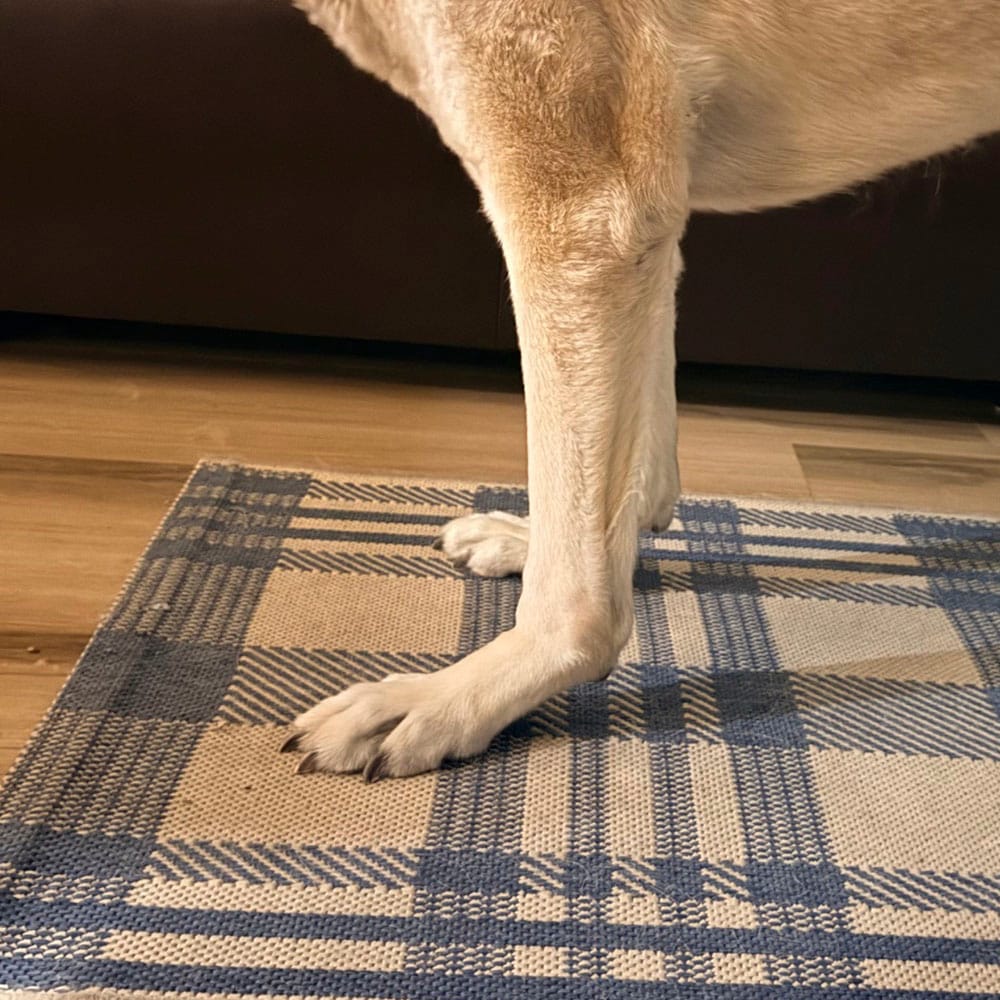
Previously without splint.
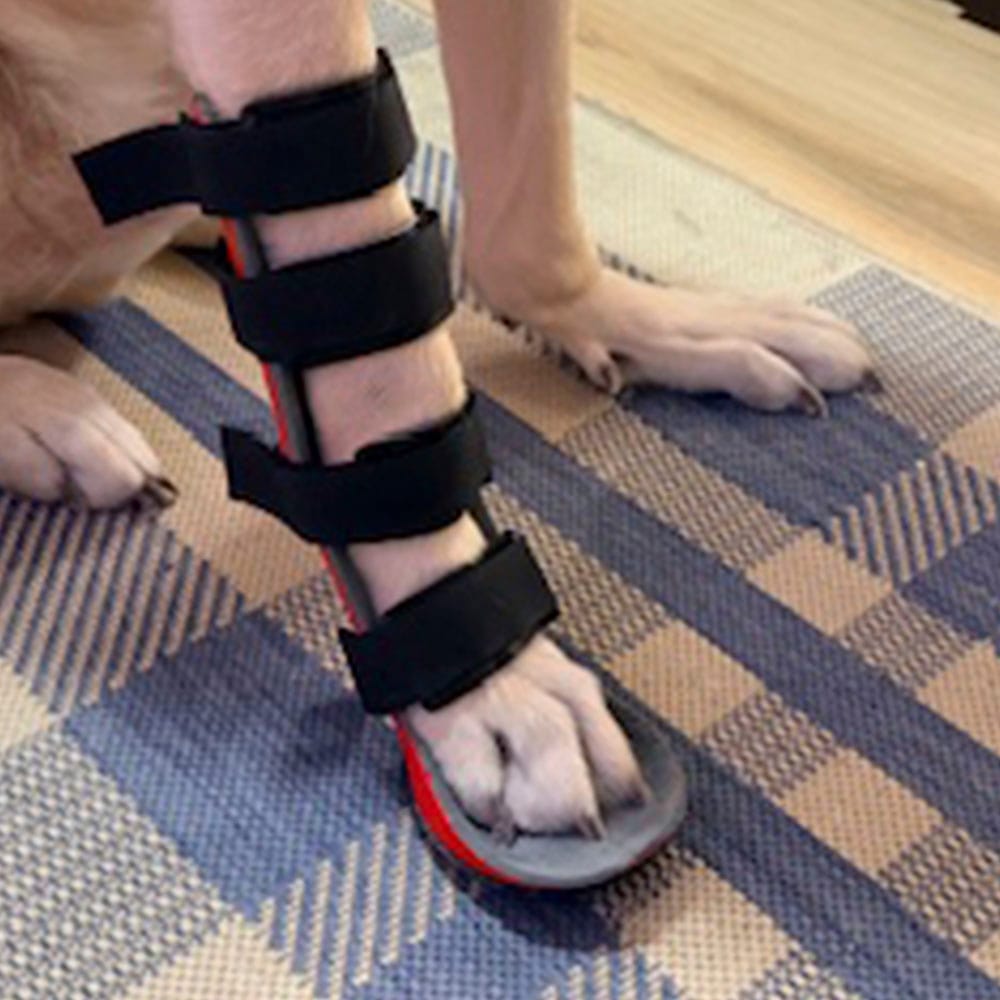
Then with splint (the other limb without splint is observed the difference).
In carpal hyperextension in dogs, a splint acts as an external stabilizing element.
Its main function is:
Limit overextension.
Maintain alignment.
Improve carpal stability.
Allow for more controlled support.
When is it advisable?
Degenerative processes.
Situations where surgery is not feasible.
As post-surgical support.
When is it not enough?
Severe complete ruptures.
Extreme instability.
Persistent severe pain.
In these cases the veterinarian must define the approach.
When to choose between carpal splint vs. full splint?
The choice between a carpal splint and a full splint depends on the degree of instability and the level of limb involvement.
The carpal splint is indicated when the injury is located primarily at the carpal joint (the dog’s “wrist”) and the rest of the limb maintains good structural stability. It is the usual choice in mild to moderate cases of carpal hyperextension or weakness.
The complete splintThe full splint, on the other hand, is recommended when there is greater biomechanical compromise: more marked instability, additional involvement of the fingers or forearm, or the need for greater control of the limb axis. In these cases it offers a more conservative and global support.
The final decision should always be based on veterinary assessment and individual analysis of each case.
Difference between custom-fitted splint and custom-made splint
In cases of carpal hyperextension in dogs, accuracy of fit is key.
Mihapi® technical sizing splint
Based on measurements.
Technical adaptation.
Balance between stability and comfort.
Indicated in most moderate cases.
Personalized splint
Manufacture on specific model.
Indicated for complex deformities.
Greater structural customization.
The choice depends on the degree of carpal collapse in dogs and individual morphology.
Prognosis and evolution
The prognosis varies according to:
Cause.
Degree of injury.
Age of dog.
Speed of action.
In mild processes, stabilization can maintain good quality of life.
In degenerative cases, the objective is to follow the evolution and minimize deterioration.
Practical tips for day-to-day use
Maintain adequate weight.
Avoid sudden jumps.
Controlled walks.
Periodic reviews.
Supervise chafing if a splint is used.
Remove the support at rest if indicated by the veterinarian.
Small adjustments can significantly improve stability and comfort.
Frequently asked questions about carpal hyperextension in dogs
Does carpal hyperextension in dogs always require surgery?
No. Many cases can be managed with conservative treatment and external support.
Does a carpal hyperextension splint correct the injury?
It does not correct the structural injury, but helps stabilize and improve support.
Can it get worse over time?
Yes, especially if there is progressive ligamentous weakness.
Is it the same as carpal collapse in dogs?
They are used as related terms. Collapse visually describes the consequence of hyperextension.
Can it affect both legs?
Yes, especially in degenerative processes.
Does overweight have an influence?
Yes, it increases the load and promotes carpal instability.
Conclusion
Carpal hyperextension in dogs is a disorder that requires professional evaluation and an individualized approach.
Understanding what is happening in the joint allows responsible decisions to be made and better monitoring of the evolution.
If you have doubts about whether your dog may need external support, you can request a technical consultation to evaluate the case in a personalized way.
Would you prefer us to accompany you in the process?
If you want to make sure that the measurements and the model chosen are correct, you can book a personalized technical study.
Customized technical study
Professional analysis of your dog’s case to ensure the chosen option and the necessary measures are correct.
Includes
– Review of photos and videos
– Assessment of the most suitable model
– Accompaniment in taking measurements
– Resolution of technical doubts
Online session (video call) or in person by appointment.