

How to choose a dog splint: a guide for guardians
Choosing a dog splint can seem complicated when you don’t know where to start. Which model do you need? Front or rear? Fore or tarsus?
In this guide we explain the 4 key factors for you to choose a dog splint safely and without mistakes.
When does a dog need a splint?
Before choosing a dog splint, it is important to understand in which situations it is indicated.
An orthopedic splint can be helpful when the dog presents:
- Joint instability in carpus or tarsus
- Carpal hyperextension(see more about this condition)
- Weakness or paresis in an extremity
- Post-surgical recovery
- Support during degenerative processes
Always consult your veterinarian before purchasing a splint. The splint accompanies the treatment; it does not replace it.
1. Identify the affected joint
The first step in choosing a dog splint is to know which joint needs support. This will directly determine the model.
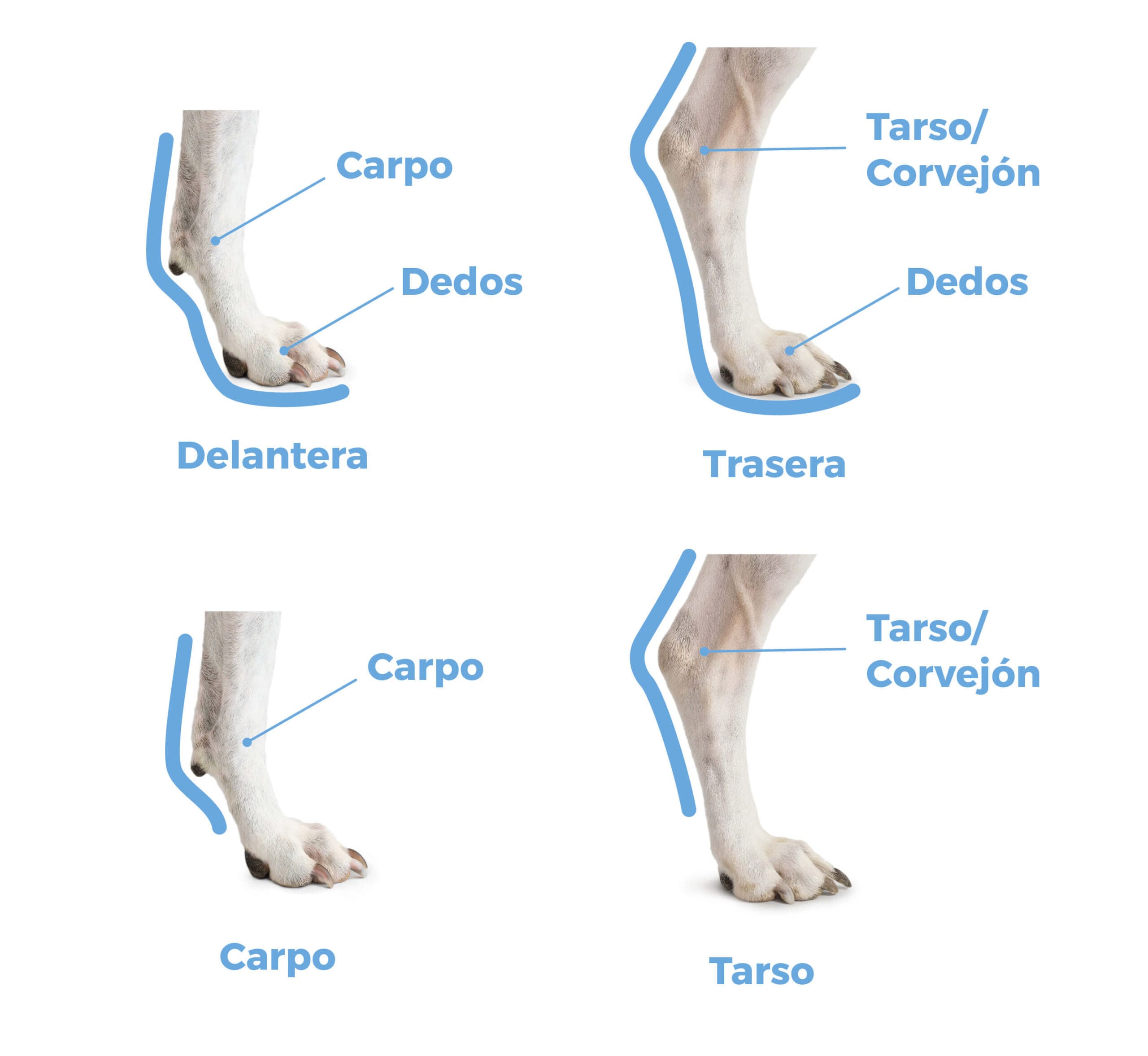
Forefoot: carpus or entire limb
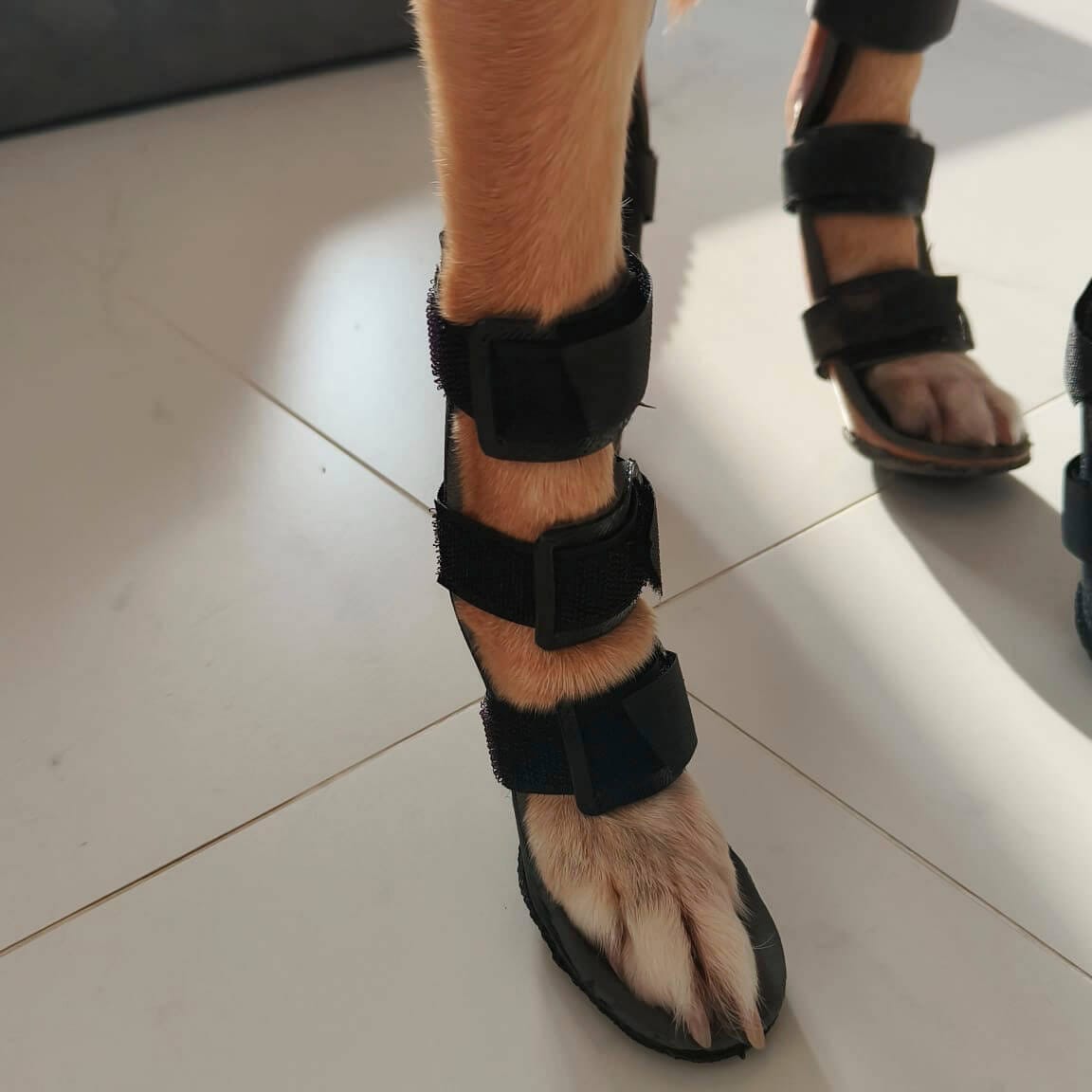
- Full front splint: indicated when there is general instability in the forelimb. Covers from the toe to above the carpus. → See front splint for dogs
- Carpal splint: support located in the carpal joint (the “wrist” of the dog). Useful in carpal hyperextensions or specific instabilities of that area. → See carpal splint for dogs.
The carpus is the joint between the forearm and the metacarpals, equivalent to the human wrist(carpal anatomy).
Hind leg: tarsus or entire limb
- Full rear splint: indicated for weakness or instability in the hind limb. Covers from the footpad to the tarsus (hock). → See rear splint for dogs
- Tarsal splint: support located in the hock. Suitable when instability specifically affects that joint. → See tarsal splint for dogs.
The tarsus is the hock joint, equivalent to the human heel, located between the tibia and the metatarsals(tarsal anatomy).
2. Choose the side: right or left
Most dog splints are designed for a specific side. Be sure to indicate whether the affected limb is the right or left.
A common mistake is to confuse the side from the guardian’s perspective with the side from the dog’s perspective. Always look at the dog from the front to determine this correctly.
Technical or customized sizing: what is your case?
Once you have identified the model, you must choose the type of adjustment. At Mihapi we work with two options:
- Technical sizing: covers 88% of common cases. Faster and more accessible.
- Customized splint according to mold: indicated for complex cases (deformities, fixed angles, ulcers, etc.).
Don’t know what your case is? We explain it in detail here: Custom splint vs. technical sizing
4. Take measurements before ordering
A well-chosen but poorly measured dog brace will not work properly. The measurements determine the sizing and therefore the actual fit of the brace.
The necessary measurements vary according to the model:
| Type of splint | Necessary measures |
|---|---|
| Front splint | Tread width + height up to the carpal pad |
| Rear splint | Tread width + height to the tarsus (hock) |
| Carpus splint | Width carpus + height from carpus to elbow |
| Tarsal splint | Tarsus width + height from toes to hocks |
Check out our complete guide to getting it right the first time: How to measure for a splint in dogs

Overview: how to choose a dog splint step by step
- Identify the affected joint (carpal, tarsal, fore or hind).
- Confirm side (right or left)
- Evaluate whether your case is a technical or custom sizing case
- Take the correct measurements before ordering
Choosing a dog brace doesn’t have to be complicated. With these 4 clear steps, you have everything you need to get it right.
Do you have doubts about which model is the most suitable for your dog? Write us and we will help you find the best option.
Frequently asked questions on how to choose a dog brace
Does a veterinarian have to prescribe it? It is not mandatory, but it is highly recommended to seek guidance from your veterinarian to confirm the diagnosis before choosing a brace for your dog.
How long has the dog been in the splint? It depends on the protocol recommended by your veterinarian. Generally, use is alternated with rest periods, especially at the beginning.
Is the size the same for all breeds? No. Sizing depends on the actual measurements of the limb, not the breed. Two dogs of the same breed may need different sizes.
In Mihapi we manufacture orthopedic splints for dogs handmade in Spain, with technical sizing and customized option according to mold.