
The dog hind leg control band is an orthopedic device that until recently did not exist in the Spanish market. Today, with the launch of the Mihapi® Walkband, veterinarians and canine physiotherapists have a simple, effective and made in Spain tool to help dogs with excessive opening of the hind limbs. In this article we explain what it is used for, in which pathologies it is indicated and why the dog hind leg control band can make a difference in the recovery process of your patient or your furry companion.
What is the Mihapi® Walkband® dog hind leg control band and how does it work?
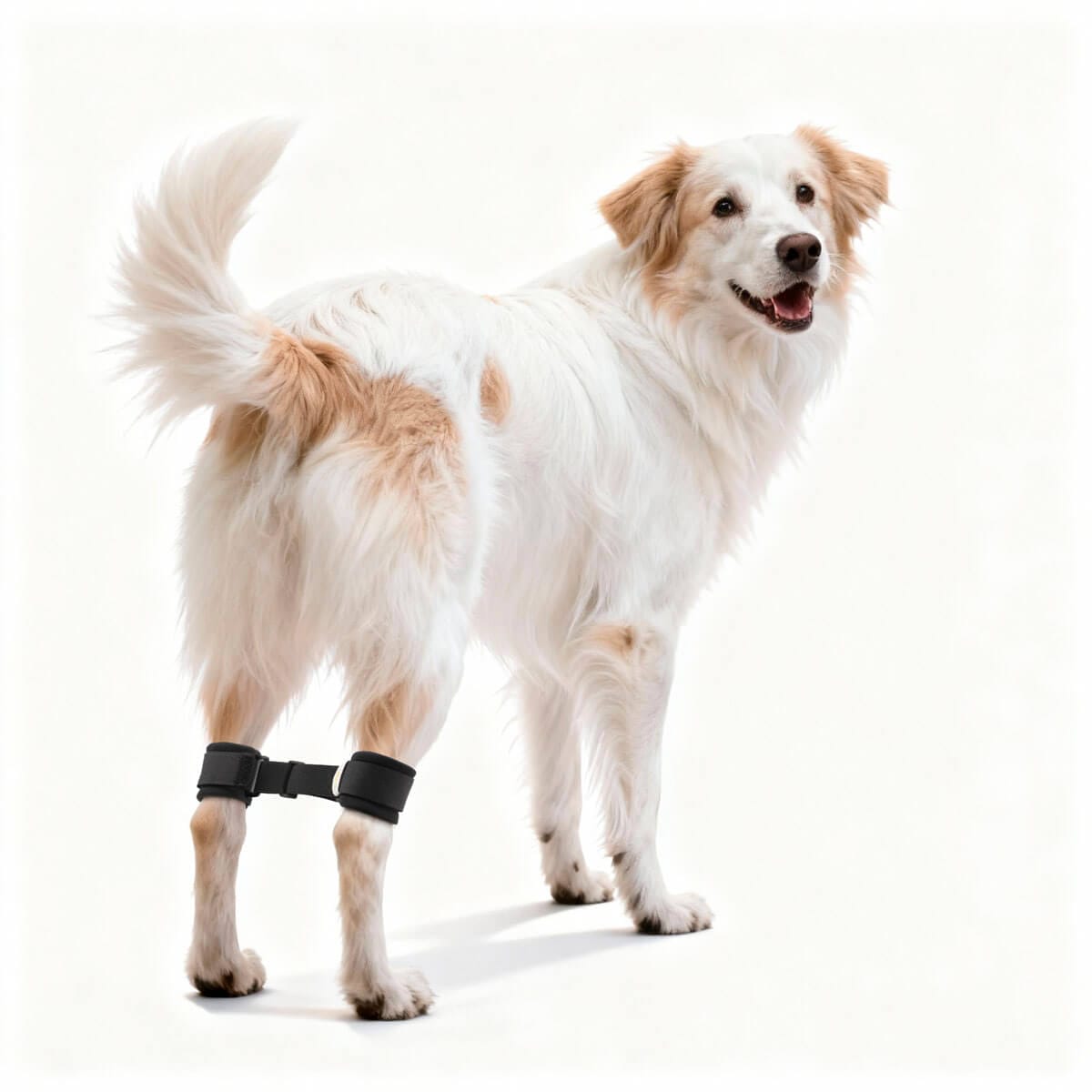
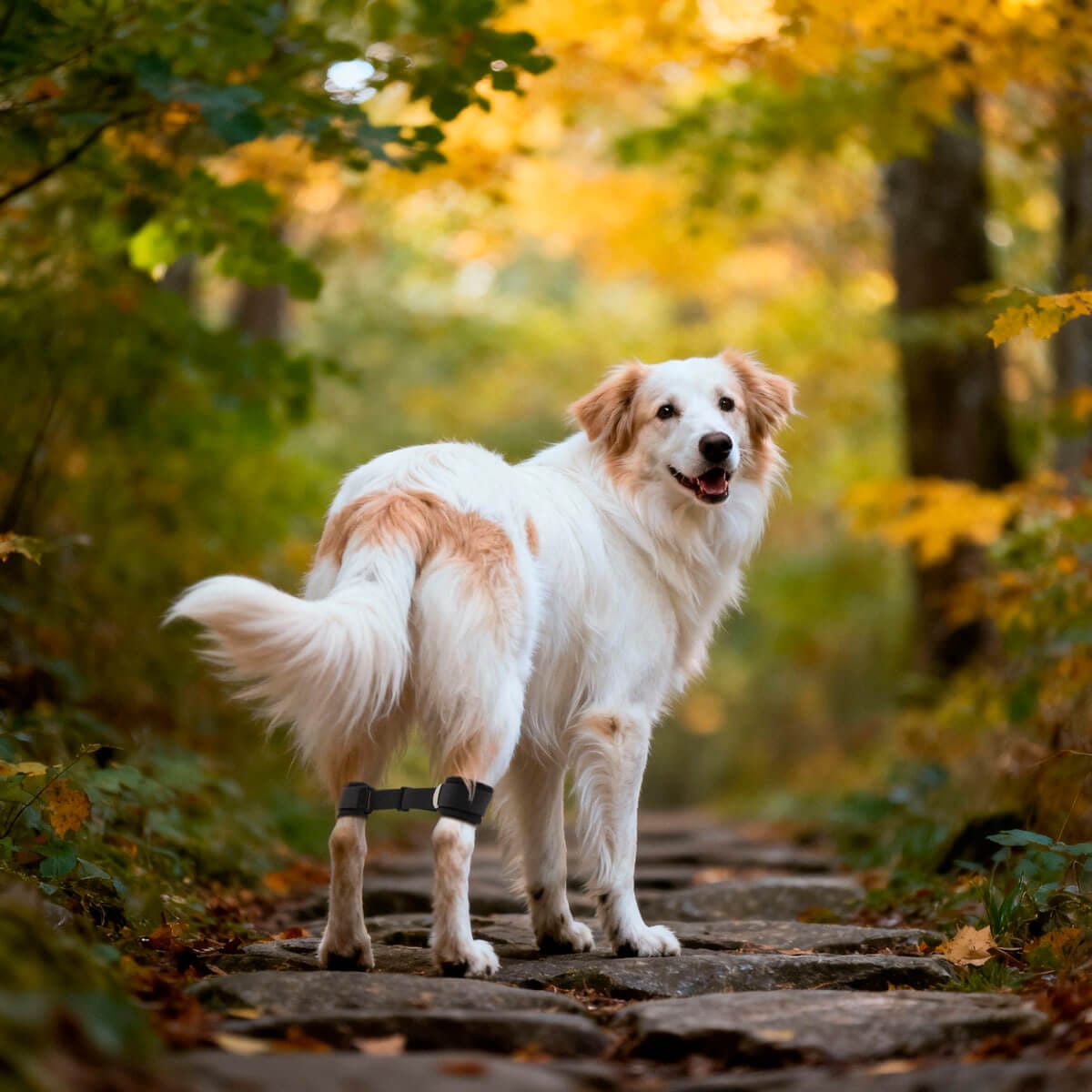
The Mihapi® Walkband is designed to limit excessive abduction of the hind limbs. It acts as a gentle functional restraint: it binds both hind legs together with an adjustable distance, allowing the dog to walk in a more aligned and stable manner without completely slowing down its natural movement.
It is made in Spain with soft, breathable and antibacterial technical material, designed for a comfortable and progressive use. Its fully adjustable design makes it suitable for breeds of different sizes, available in sizes from XXS to XL. Unlike other rigid immobilization devices, the Walkband accompanies the movement instead of blocking it, favoring gait re-education.
The control band for dog hind legs is still a little known product in the Spanish veterinary sector. Only a few companies specialized in veterinary orthopedics currently offer it, so many professionals have not yet had the opportunity to prescribe it or recommend it to their clients.
”The control band for the dog's hind legs does not replace veterinary treatment: it complements it, accompanying the animal in its recovery and gait re-education process.
Why does excessive opening of the hind legs occur in dogs?
Excessive hind limb abduction is not an isolated symptom: it responds to very diverse causes ranging from developmental alterations to post-surgical processes. Understanding the origin helps to choose the most appropriate therapeutic approach and to determine if the dog’s hind leg control band can be a useful tool in the recovery plan.
1. Puppy swimmer’s syndrome
It is one of the most frequent indications for this type of device. Affected puppies are unable to keep their legs under their bodies and tend to sprawl sideways instead of standing. Early intervention with the dog hind leg control band, along with physical therapy and progressive exercise, can help redirect the movement pattern during the most critical phases of development.
2. Hip dysplasia and pelvis or femur surgery.
Hip dysplasia is a multifactorial joint malformation that particularly affects large and giant breeds. In dogs that have undergone hip surgery – be it a triple pelvic osteotomy, arthroplasty or prosthesis placement – subsequent stability can be compromised for weeks. The Mihapi® Walkband can act as a support in the post-operative rehabilitation process, controlling the opening of the hind legs while the animal regains strength and coordination.
To better understand the anatomy involved, the University of Cordoba offers a detailed resource on canine hip dysplasia from an anatomical and clinical point of view.
3. Neurological alterations
Certain neurological pathologies – herniated discs, spinal cord compression or peripheral neuropathies – can reduce motor control of the hind limbs, leading to instability, ataxia or weakness. In these cases, the dog’s hind leg control band can provide a proprioceptive reference point to facilitate a more controlled gait, always as a complement to the established neurological protocol.
4. Muscle weakness and atrophy due to age or inactivity.
Geriatric dogs or animals that have spent prolonged periods of rest may have muscle atrophy in the hind legs, making it difficult to maintain a stable walking position. The dog hind leg control band helps compensate for this loss of muscle tone temporarily, while the animal works on its physical recovery.
5. Trauma and recovery processes
Fractures, dislocations or ligament injuries in the pelvic or femoral area can leave the dog with altered gait mechanics during recovery. In these cases, a functional support such as the dog’s hind leg control band is a valuable resource to avoid compensations that in the long term generate other articular or muscular problems.
How does excessive hind leg opening affect a dog’s quality of life?
A dog that cannot keep its hind legs aligned suffers the consequences in its day-to-day life in a silent but constant manner. Walking insecurity leads to reduced activity, avoidance of slippery surfaces or reluctance to walk. In the medium term, the overload generated by a compensated gait can lead to chronic pain, secondary injuries or accelerated muscle wasting.
Acting in time with the dog’s hind leg control band not only improves the mechanics of movement: it also restores the animal’s confidence, reduces the fear of falling and facilitates a more active and participatory recovery. Movement, with the right support, is always part of the solution.
Mihapi® Walkband: features and sizes of the control band for dog hind legs
The Mihapi® Walkband dog hind leg control band is available in five sizes covering miniature to large breeds, with a simple measurement based on hock contour. Correct sizing ensures that the band provides the right point of functional restriction without compromising circulation or creating chafing.
Its technical materials make it lightweight, breathable and antibacterial, characteristics that are especially important in devices for prolonged use or in dogs with sensitive skin. The progressive adjustment makes it possible to adapt the tension as the animal improves, making the Walkband a tool that accompanies the different phases of recovery.
If you have doubts about the most suitable size for your dog, you can consult the sizing guide available in the product sheet in the Mihapi store, where you will find the step by step guide to take the correct hock measurement.
What veterinarians often ask about a dog’s rear leg control band
Can it be used without a veterinary prescription?
The Mihapi® Walkband is a functional device and does not require a medical prescription for its purchase. However, in cases of neurological pathology, postoperative or swimming puppy syndrome, it is always recommended to introduce the dog’s hind leg control band under the supervision of a veterinarian or canine physiotherapist to ensure a correct and progressive use.
How long a day should the dog wear it?
The time of use depends on the specific case. The usual guideline is to start with short sessions of 15-30 minutes and increase progressively according to the animal’s response. For dogs in active rehabilitation, the canine physiotherapist will establish the most appropriate frequency and duration.
Does it work only for the hind legs?
Yes, the Mihapi® Walkband is designed exclusively for the hind limbs. Its function and biomechanics are intended for the dog’s hindquarters and should not be used on front legs.
How to fit the dog’s hind leg control band
Attaching the Mihapi® Walkband correctly is simple and requires no tools. Follow these steps to ensure a secure and comfortable fit from the first use.
Step 1. Prepare the dog
Place the dog in a standing position on a non-slip surface. Make sure the hind legs are in their natural position, without forcing them apart or locking them.
Step 2. Identify the adjustment zone
The band is placed over the hock (tarsus) of each hind leg. Locate this point on both limbs before starting.
Step 3. Insert each leg
Gently pass each hind limb through its corresponding ring or band attachment, starting with the animal’s quietest leg.
Step 4. Adjust the tension
Adjust the length of the band until the legs are at a functional distance: neither too close together (which would hinder movement) nor too far apart (which would cancel out the control effect). As a reference, the distance between legs should allow a natural gait with a slight restriction of the opening.
Step 5. Check the fit in the hock.
Check that the fastenings do not compress the fabric or are not too loose. You should be able to insert a finger between the band and the leg without difficulty.
Step 6. Motion test
Allow the dog to take a few steps and observe its gait. The band should accompany the movement without causing tripping, visible rubbing or discomfort. If the dog stops or tries to remove it immediately, check the fit before continuing.
Remember to start with short sessions of 10-15 minutes and increase the time of use progressively according to the animal’s tolerance.
A control band for the dog’s hind legs designed to accompany, not restrict.
The Mihapi® Walkband was born from the real need to have a control band for the dog’s hind legs, accessible, well manufactured and supported by the experience in veterinary orthopedics that characterizes Mihapi. It is a new product in the Spanish market, but with a clear clinical basis and a wide field of application: from puppies with swimming syndrome to geriatric dogs with posterior weakness, including all cases of post-surgical recovery of the hip and pelvis.
If you are a veterinarian, canine physiotherapist or owner of a dog with any of these situations, you can learn all the technical details, sizes and how to order on the product page in our store. And if you have any doubts about whether the control band for dog hind legs is the right choice for your case, do not hesitate to contact us: we will be happy to guide you.