
Why is postoperative hip surgery recovery in dogs so demanding?
Postoperative recovery after hip surgery in dogs is one of the most complex rehabilitation processes in veterinary medicine. The coxofemoral joint supports 60 % of the body weight during gait, which makes it necessary to plan each phase precisely: from immediate absolute rest to progressive reintegration of movement.
Surgery can respond to several causes: hip dysplasia, femoral neck fracture, traumatic dislocation or severe joint degeneration. Regardless of the previous diagnosis, the postoperative protocol shares a common structure that the owner should be aware of to avoid complications and shorten recovery time.
In this article you will find the 5 stages of healing, essential home care, warning signs and how specific orthopedic aids – such as the hind leg control band – can make the difference between slow rehabilitation and full functional recovery.
Postoperative Recovery from Hip Surgery in Dogs with Rest and Orthopedic Support
The 5 phases of postoperative recovery from hip surgery in dogs
Each phase has its own therapeutic objectives. Skipping one or accelerating the pace without veterinary supervision is the main cause of relapses and mechanical complications.
Phase 1: Absolute rest (days 1-7)
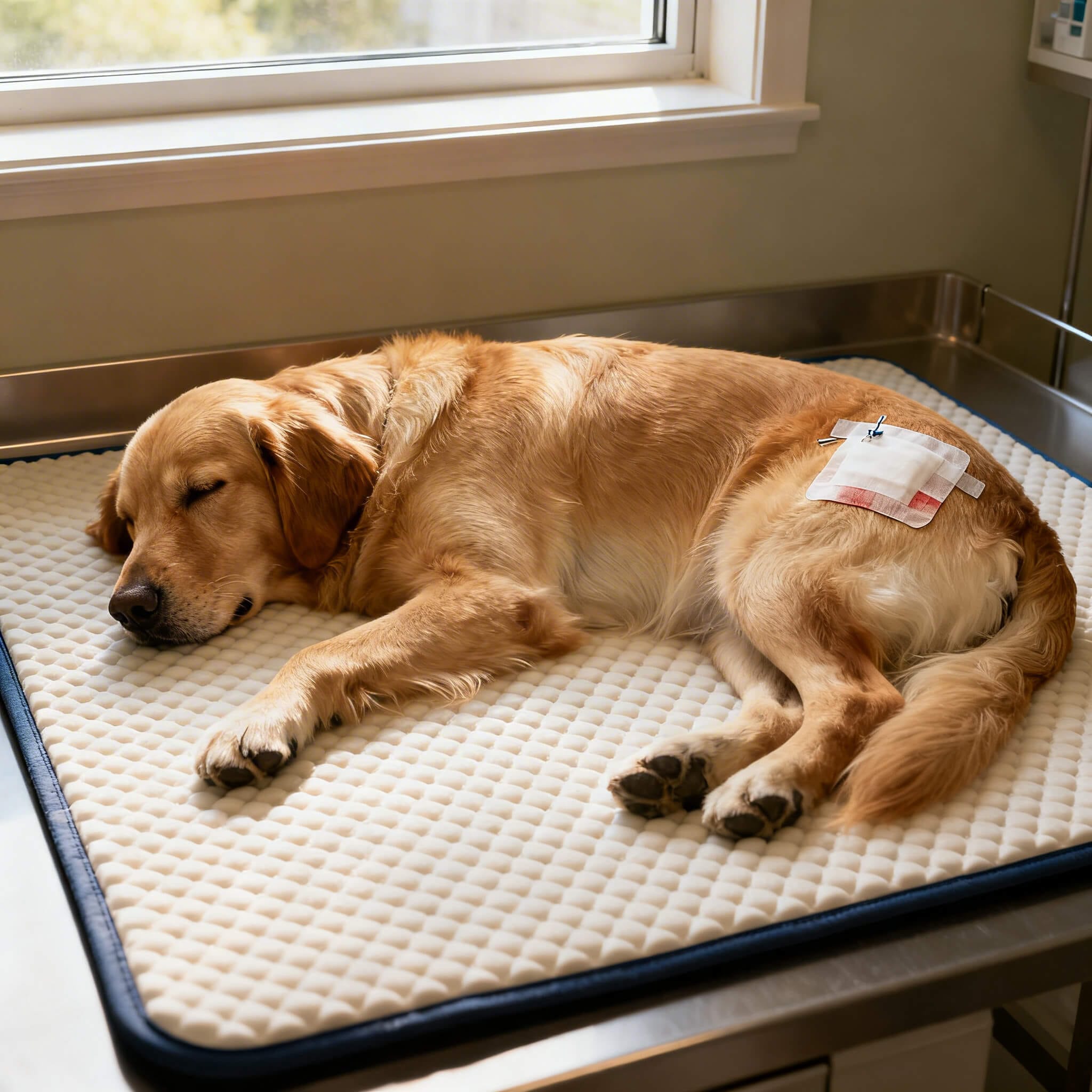
During the first seven days, the objective is to protect the surgical wound and avoid any load on the joint. The dog should be kept in a confined space – a cage or orthopedic playpen – that prevents sudden turns, jumps and stairs.
- Non-slip surfaces throughout the home
- Walks exclusively for urination and defecation, on short leashes
- Analgesia and anti-inflammatory drugs according to veterinary guidelines.
- Daily wound check: no oozing, no excessive redness, no stitch openings
According to the literature specialized in veterinary orthopedic surgery at the UAB, the initial stabilization of the implant or repaired tissue depends directly on the immobilization in this first week.
Phase 2: Relative rest and passive physiotherapy (weeks 2-4)
From day 8, if the veterinary review is positive, passive physiotherapy is introduced: gentle joint movements performed by the owner or the physiotherapist, without the animal actively carrying weight. The aim is to maintain joint mobility and reduce muscle atrophy.
- Gentle flexion-extension of the affected limb (10-15 repetitions, 2-3 times a day).
- Massage of the periarticular musculature to activate circulation.
- Short walks of 5-10 minutes, always on a leash and on flat surfaces.
Phase 3: Progressive loading and movement control (weeks 5-8)
This phase is critical: the dog starts to support the limb spontaneously, but
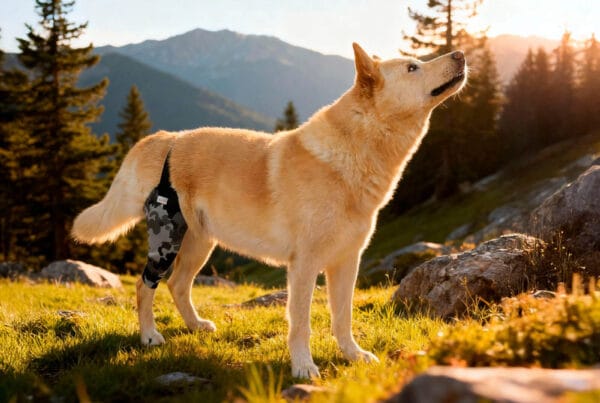
This is where Mihapi’s Mihapi’s Walkband hind leg control band brings its provides its greatest value. By limiting abduction and external rotation of the pelvic limb, the Walkband reproduces the function of muscle support that has not yet regained full tone, guiding support and protecting the newly operated joint.
The Walkband acts differently in this therapeutic window than the rear support sling – which is used in the immediate phase to assist hindquarter lifting – as its function is proprioceptive and stabilizing, not lifting.
Phase 4: Active rehabilitation (weeks 9-16)
With radiological clearance – confirmation of bone integration or complete tissue healing – active exercises are incorporated: walking on variable terrain, balance exercises, hydrotherapy and progressive loading ramps.
- Hydrokinetotherapy on aquatic treadmill (if available): minimum joint impact, maximum muscle activation
- Proprioception exercises: unstable platforms, controlled turns in 8°.
- Gradual increase in the duration of walks: from 15 to 45 minutes in 4 weeks
For cases operated with total hip prosthesis, the protocol can be extended up to 6 months. The cementless prosthesis technique in veterinary medicine requires a bone integration that is completed between 8 and 16 weeks post-surgery.
Phase 5: Return to normal activity and maintenance (from week 17 onwards)
The dog can resume its usual routines progressively. However, in large breeds with previous severe hip dysplasia, a biannual veterinary control and the maintenance of orthopedic aids is recommended during periods of increased activity or on days of intense cold, when joint stiffness increases.
Postoperative recovery from hip surgery in dogs does not end when the dog stops limping: it ends when the gluteal musculature has regained sufficient tone to protect the joint without external help.
Essential home care during recovery
The home environment can either promote or sabotage recovery. These are the must-have adjustments for an “orthopedically safe” home:
- Surfaces: cover parquet or ceramic floors with non-slip rubber mats, especially in hallways and at the bedside.
- Outdoor access: install ramps on steps. The impact of walking down a single step generates a force of up to 2.5 times body weight on the hip.
- Orthopedic bed: viscoelastic foam distributes pressure and reduces pain due to prolonged decubitus.
- Temperature: cold increases joint stiffness. A thermal blanket or vest in winter can reduce morning pain.
- Weight monitoring: each kilogram of excess weight increases the joint load disproportionately. Consult your veterinarian about a diet adapted to the recovery phase.
The Royal Canin Academy offers specific nutritional guidelines for recovery after hip surgery, with recommendations for omega-3, collagen and vitamin E to promote regeneration of periarticular cartilage.
Pathologies requiring hip surgery and specific recovery protocol
Hip dysplasia: the most frequent indication
Canine hip dysplasia is the most commonly diagnosed orthopedic malformation in large and giant breeds. When conservative treatment fails, surgical techniques such as triple pelvic osteotomy (TOP), resection arthroplasty or total hip replacement are used.
In the postoperative recovery from dysplasia, movement control in the first weeks is decisive for the final functional outcome. The Walkband limits the abduction movements that generate the most stress on the new joint configuration, especially in phases 2 and 3 described above.
For more information on the surgical techniques available, you can consult Axon Comunicación’s article on the Innoplant total hip replacement system, one of the most precise solutions currently available in Spain.
Fracture and traumatic hip dislocation
Trauma -strokes, falls from heights or bites in fights- can cause acetabular fractures, femoral neck fractures or dislocations that require immediate surgical reduction. In these cases, the postoperative protocol is identical in structure to that for dysplasia, but healing times vary according to the technique used (screw fixation, K-wire or prosthesis).
The owner must understand that the absence of lameness does not equate to complete recovery: bone and muscle tissue continues to heal for weeks after the dog resumes apparently normal support.
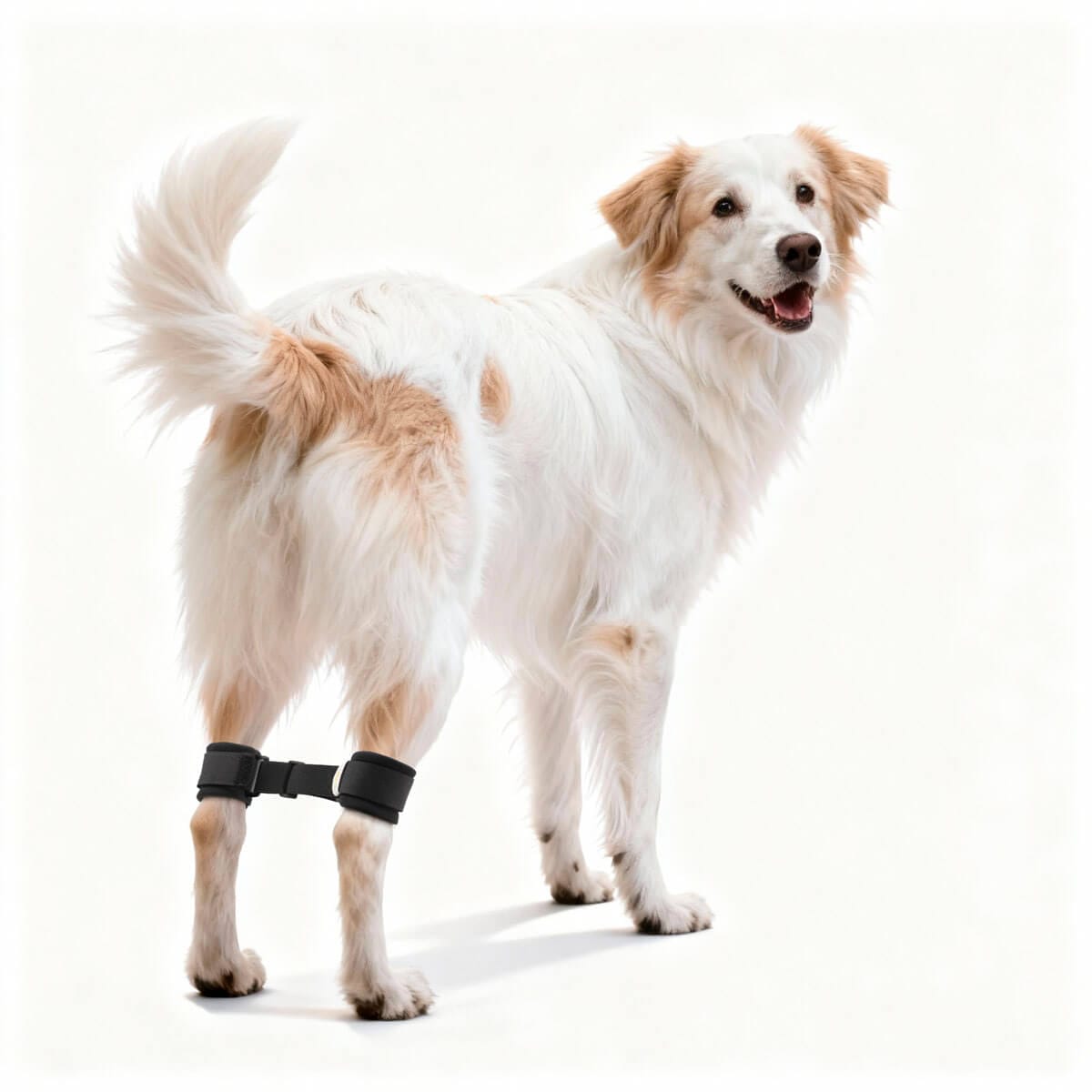
Correct placement of the Mihapi Walkband on the dog’s hind legs.
The Walkband versus other orthopedic aids: when to use each one?
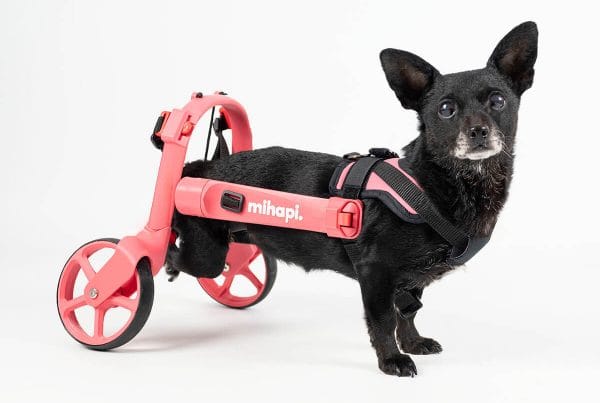
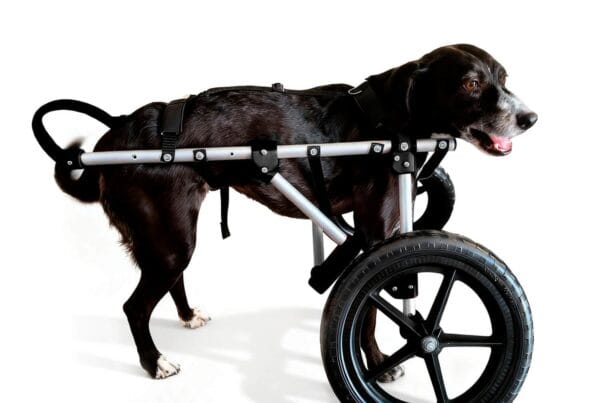
There are different types of orthopedic solutions on the market. It is important to understand that they do not compete with each other, but cover different phases of the recovery process.
- Hind support harness: indicated in the first 24-72 hours post-surgery to assist the owner in lifting the dog’s hindquarter during minimal movement. It does not actively stabilize the joint.
- Hind leg control band (Walkband): indicated from week 3-4, when the dog begins to carry weight spontaneously but the stabilizing musculature is still insufficient. It limits risky joint movements without impeding physiological gait.
- Rigid joint orthosis: reserved for cases with severe instability or unconsolidated fractures. Requires specific veterinary prescription and custom fabrication.
The Mihapi Walkband occupies the central therapeutic space: the dog no longer needs to be lifted, but does not yet have the muscle stability to move safely without support. Its anatomical design and breathable materials allow continuous use for several hours a day without chafing or compression.
Unlike products such as the Balto Link, which opts for a more rigid, immobilization-oriented design, the Walkband prioritizes the guidance of movement: it does not block it, it accompanies it. This is especially relevant in the active rehabilitation phase, where proprioception – the dog’s ability to perceive its own body position – must be actively, not passively, retrained.
Warning signs during recovery: when to call the veterinarian
Knowing the signs of complications can make the difference between early intervention and a second surgery. See your veterinarian if you notice:
- Sustained fever (rectal temperature above 39.5 °C) in the first 5 days
- Yellowish, greenish or foul-smelling oozing from surgical wound
- Stitch reopening or scar dehiscence
- Total refusal to support the limb 2 weeks after surgery
- Audible clicking or crackling when mobilizing the joint
- Persistent swelling or warmth in the hip area beyond the first week
- Abrupt behavioral changes: unusual aggressiveness, extreme apathy or loss of appetite
Frequently asked questions on postoperative recovery from hip surgery in dogs
How long does it take for a dog to recover from hip surgery?
The minimum time for a basic functional recovery is 8 to 12 weeks, counting from the intervention. In cases of total hip prosthesis or complex fractures, the complete protocol can be extended up to 6 months. The return to sport or work should not be anticipated without radiological confirmation.
Can the dog be left home alone during recovery?
In the first two weeks, it is not advisable to leave him alone for more than 3-4 hours at a time. The risk of him trying to get up abruptly, slipping or removing the Elizabethan collar without supervision is high. From the third week onwards, autonomy can be gradually extended.
Can the Walkband be used from the first day post-surgery?
No. In the early days, the priority is immobilization and protection of the injury. The Walkband is recommended starting in the progressive weight-bearing phase (usually weeks 3–5), when the dog is already bearing weight but needs guidance with its gait. Always consult your veterinary rehabilitation specialist before introducing any orthosis.
Is veterinary physical therapy necessary or can everything be done at home?
Face-to-face physiotherapy with a specialist significantly accelerates recovery and reduces the risk of complications. Maintenance techniques (massage, passive mobilizations, simple proprioception exercises) can be applied at home, but do not replace a regular professional assessment, especially at the 4-, 8- and 12-week check-ups.
Can hip dysplasia recur after surgery?
Surgery corrects joint pathology, but does not eliminate the genetic predisposition to joint degeneration. Therefore, maintenance of optimal weight, controlled physical activity and the use of orthopedic aids during periods of increased demand are lifelong recommendations in predisposed breeds.
Can I bathe my dog during recovery?
Not until the stitches are removed and the wound is completely closed, usually between the 12th and 14th day. From that moment on, baths are possible, but the hip area must be well dried and the dog must be prevented from rubbing or licking the recent scar.
Conclusion: postoperative recovery from hip surgery in dogs is a team process.
Successful recovery after canine hip surgery does not depend solely on the skill of the surgeon: it depends equally on the rehabilitation protocol applied at home, the consistency of the owner and the orthopedic tools used at each stage.
The 5 phases described in this article provide a general framework that should always be adjusted by the treating veterinarian. The Walkband is not a substitute for medical treatment: it is a therapeutic ally that, used at the right time, can accelerate the recovery of functional stability and reduce the risk of relapses.
If your dog is in the recovery process after hip surgery or has been diagnosed with dysplasia, discover Mihapi’s Walkband hind leg control band and ask your veterinarian if it is the right choice for your pet’s stage of recovery.