
What is puppy swimmer syndrome in dogs?
Puppy swimmer syndrome in dogs is a musculoskeletal developmental disorder that affects puppies in their first weeks of life. It is characterized by an inability to keep the limbs in the correct position under the body, causing the animal to remain flat on the sternum with the legs extended laterally, as if it were swimming.
This condition usually appears between two and four weeks of age and most frequently affects brachycephalic breeds such as the English Bulldog, the Basset Hound or the Maltese Bichon, although it can occur in any breed.
If not detected and treated in time, it can lead to permanent deformities and even the inability of the puppy to walk independently. For this reason, early detection is essential.
A thorough understanding of puppy swimmer syndrome in dogs allows breeders and owners to react as quickly as this condition demands. The earlier it is identified, the better the chances of a full recovery.

Swimming Puppy Syndrome in Dogs – Puppy with Legs Extended Out to the Sides
Causes and risk factors
The causes of puppy swimmer syndrome in dogs are not fully established, although veterinary research points to a combination of genetic, environmental and management factors. According to an analysis by veterinary specialists published in AnimalsHealth, the most common factors include:
- Slippery surfaces in the rearing area, which prevent the puppy from developing the necessary muscle strength in the limbs.
- Early obesity or overweight, especially in puppies that are overfed in the first weeks.
- Genetic predisposition in breeds with wide body conformation or with very developed thorax.
- Lack of motor stimulation in the rearing environment, which delays normal neuromuscular development.
Understanding the origin of the problem is the first step to apply a correct treatment and avoid long-term sequelae.
How to detect puppy swimmer syndrome: warning signs
Early detection is key to effective treatment. The most common signs that should alert the breeder or owner are:
- The puppy does not attempt to stand up on all four legs as the weeks go by.
- The limbs, especially the hind limbs, open out to the sides instead of lying under the body.
- The abdomen and sternum are permanently in contact with the ground.
- Difficulty in suckling or reaching the mother due to lack of mobility.
- The pup moves by crawling, with movements similar to swimming.
If you notice any of these signs before four weeks of age, consult a veterinarian as soon as possible. Puppy swimmer syndrome in dogs diagnosed early responds very well to treatment. Early diagnosis can completely change the prognosis.
How to act: treatment options
The approach to puppy swimmer syndrome in dogs combines physical therapy, environmental modifications and orthopedic support. The goal is to redirect the position of the limbs while the musculoskeletal system is still malleable. There is no single universal protocol: the veterinarian will adapt the plan to the age and severity of each case.
Physiotherapy and motor stimulation
Canine physiotherapy is the mainstay of treatment. It consists of daily sessions of muscle massage, passive mobilization of the joints and exercises on surfaces that promote grip. Changing the floor of the breeding area to non-slip surfaces (carpet, artificial grass) can make a significant difference from day one.
According to a study published in Axon Comunicación, the combination of physiotherapy and early postural correction obtains positive results in most cases when initiated before eight weeks of age.
Orthopedic support: control band for hind legs
When physical therapy alone is not sufficient to correct hind limb abduction, the use of a specific orthopedic bra ce is the most effective and least invasive solution.
The Mihapi’s hind leg control band has been specifically designed to keep the hind limbs in the correct position during recovery phases. It acts as a soft postural corrector that limits the lateral opening of the legs without restricting the natural forward movement.
Its main characteristics are:
- Soft and breathable material, adapted to the delicate skin of puppies.
- Adjustable adjustment to adapt to the progressive growth of the animal.
- Easy to install, designed for continuous domestic use under supervision.
- Compatible with physiotherapy sessions and movement on the floor.
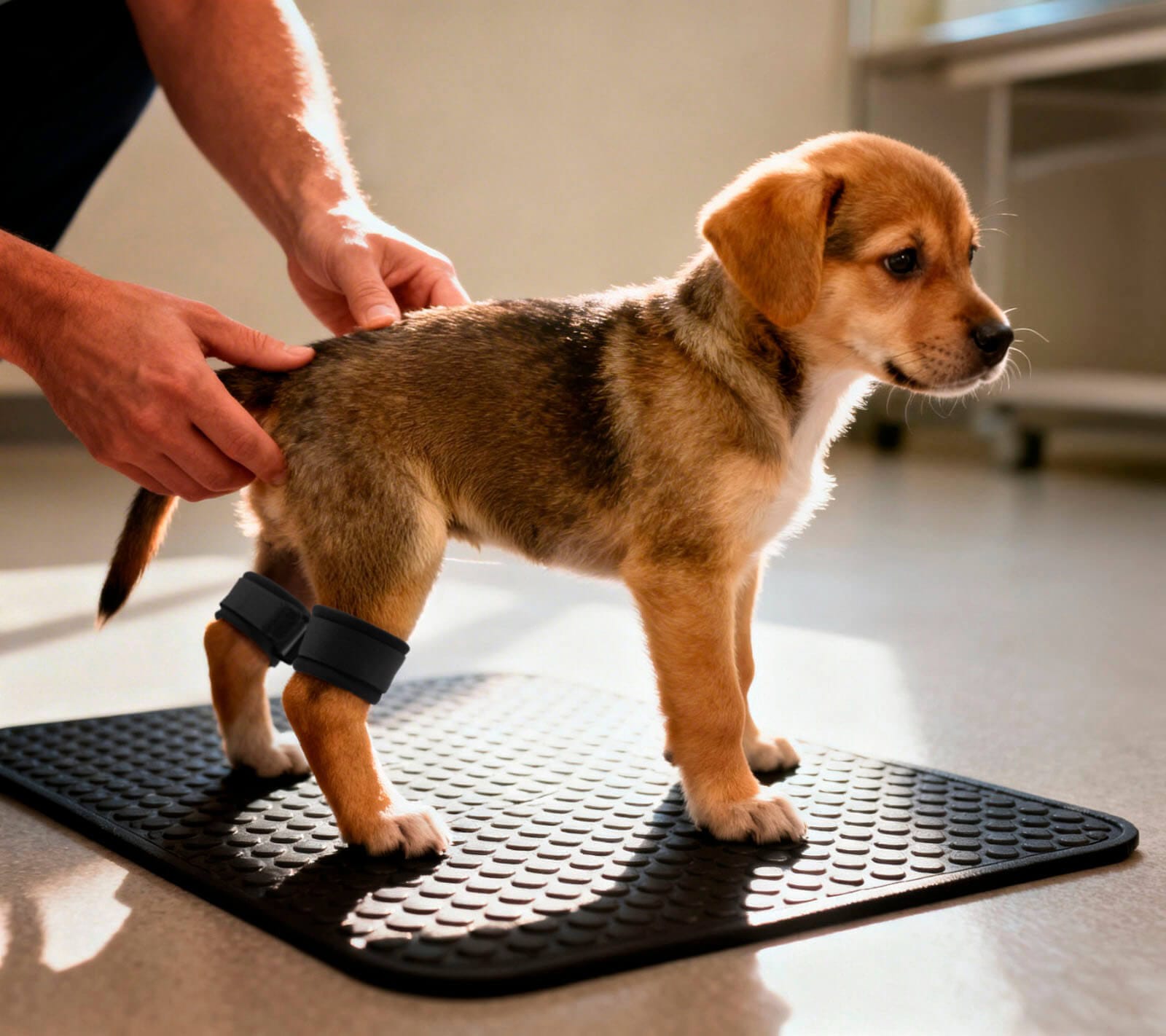
Orthopedic brace for swimmer’s syndrome in dogs
Intervening before 8 weeks with physical therapy and orthopedic support can be the difference between a full recovery and permanent disability.
Clinical evidence: what the research says
Scientific interest in swimming puppy syndrome has grown in recent years. A clinical case documented by the University of Extremadura illustrates how the combined intervention – postural correction, active physiotherapy and use of orthoses – allowed the complete functional recovery of a puppy diagnosed with this pathology, without the need for surgery.
These cases reinforce the importance of not resigning oneself to the diagnosis. Puppy swimmer syndrome in dogs, when treated with a structured protocol from the first weeks, has a favorable prognosis in the vast majority of animals.
Advantages of orthopedic support over other solutions
There are different approaches to correct posture in swimming puppies. The most commonly used are homemade tape bandages, handmade hobbling systems and specific orthopedic supports. Not all offer the same level of safety and efficacy.
- Bandages made of adhesive tape: economical but with risk of chafing, difficult adjustment and need for frequent replacement.
- Hobbling craft: can excessively limit movement if not applied with the exact tension, generating compression or anxiety in the puppy.
- Professional orthopedic band: designed with specific materials for continuous use, with progressive adjustment and without risk of injury. Allows the puppy to move, explore and do physiotherapy without removing the device.
The Mihapi’s hind leg control band combines the safety combines the safety of an approved veterinary product with the convenience of home use. It does not require technical knowledge for application and can be used from the first weeks of treatment.
Conclusion: act early and with the right tools.
Puppy swimmer syndrome in dogs is not a sentence. With early diagnosis, consistent physical therapy and the support of proper orthopedic support, many puppies achieve full functional recovery before twelve weeks of age.
The key is not to wait: every week counts when the musculoskeletal system is still forming. Watch your puppies from the first days, identify any warning signs and consult your veterinarian at the slightest doubt.
If your puppy has already been diagnosed or you suspect this condition, Mihapi’s Mihapi’s hind leg control band can be the complement that makes the difference in his recovery. Check its features, sizes and mode of use in our store and get started today.
Frequently asked questions about puppy swimmer syndrome in dogs
Is there a cure for puppy swimmer syndrome in dogs?
In most cases, it does have a solution, especially when detected before eight weeks of age. With a combined protocol of physical therapy, environmental modification and orthopedic support, many puppies achieve full functional recovery. The prognosis worsens the later treatment is initiated, so early action is critical.
From what age can the hind leg orthopedic band be used?
The orthopedic support can be introduced from the first weeks of treatment, always under veterinary indication. The Mihapi hind leg control band has an adjustable fit that allows it to adapt to the size of the puppy as it grows, so it can be used throughout the recovery phase without the need to change the product.
How long does the treatment of puppy swimmer syndrome last?
The duration varies according to the severity of the case and the age of initiation of treatment. In mild cases detected very early, significant improvements can be seen in two to three weeks. In more advanced cases, the process may extend up to twelve weeks of age. Daily consistency in physical therapy and the continued use of orthopedic support are the factors that most influence the speed of recovery.
Frequently asked questions about puppy swimmer syndrome in dogs
Is there a cure for puppy swimmer syndrome in dogs?
In most cases, it does have a solution. Puppy swimmer syndrome in dogs responds especially well when detected before eight weeks of age. With a combined protocol of physical therapy, environmental modification and orthopedic support, many puppies achieve full functional recovery. The prognosis worsens the later treatment is initiated, so acting quickly is critical.
From what age can the hind leg orthopedic band be used?
The duration of treatment of puppy swimmer syndrome in dogs varies according to the severity of the case and the age of onset of the intervention. In mild cases detected very early, significant improvements can be seen in two to three weeks. In more advanced cases, the process may extend up to twelve weeks of puppyhood. Daily consistency in physical therapy and the continued use of orthopedic support are the factors that most influence the speed of recovery.
How long does the treatment of puppy swimmer syndrome last?
The duration of treatment of puppy swimmer syndrome in dogs varies according to the severity of the case and the age of onset of the intervention. In mild cases detected very early, significant improvements can be seen in two to three weeks. In more advanced cases, the process may extend up to twelve weeks of puppyhood. Daily consistency in physical therapy and the continued use of orthopedic support are the factors that most influence the speed of recovery.