
Tarsal hyperextension in dogs: causes, symptoms and treatment
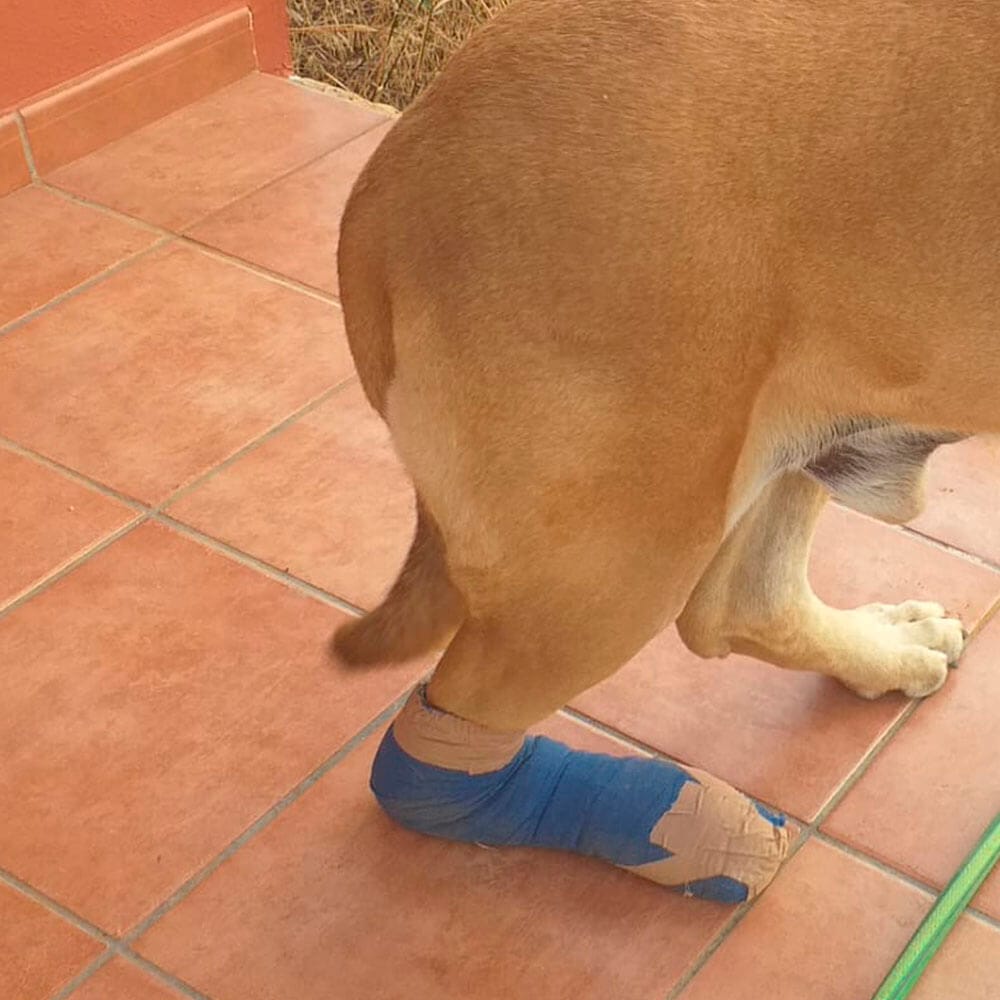
Tarsal hyperextension in dogs is an alteration of the rear joint that causes the animal’s ankle to collapse towards the ground when the paw rests on the ground. This situation can appear after an injury, a ligament problem or a structural weakness of the joint.
When tarsal hyperextension appears in dogs, the hind limb loses stability and the dog may show difficulties in walking, supporting the limb correctly or maintaining balance.
In some cases it may occur in conjunction with other hind limb instability problems, especially in older animals or after prolonged periods of immobilization. Veterinary evaluation can determine the exact origin of the problem and decide whether tarsal hyperextension in dogs requires rest, physical therapy or some type of orthopedic support to help stabilize the joint during daily activity.
Understanding this pathology is key to detecting symptoms early and assessing the management options available.
What is tarsal hyperextension in dogs?
The tarsus is the joint equivalent to the human ankle in the dog’s hind limb. It is formed by several bones and ligaments that allow flexion, extension and shock absorption during walking.
You can consult the complete anatomy of the tarsus in this veterinary resource:
https://www.imaios.com/es/vet-anatomy/estructuras-anatomicas/tarso-11073784712#from=4
In tarsal hyperextension in dogs, the ligaments or supporting structures fail to maintain the joint in its normal range, allowing the tarsus to open excessively posteriorly during weight bearing.
Causes of tarsal hyperextension in dogs
The most frequent causes include:
trauma or accidents
ligament rupture or laxity
degenerative joint injuries
muscle or neurological weakness
instability after surgery
In some dogs, tarsal hyperextension appears progressively, especially when there is ligamentous wear or previous orthopedic problems.
Common symptoms
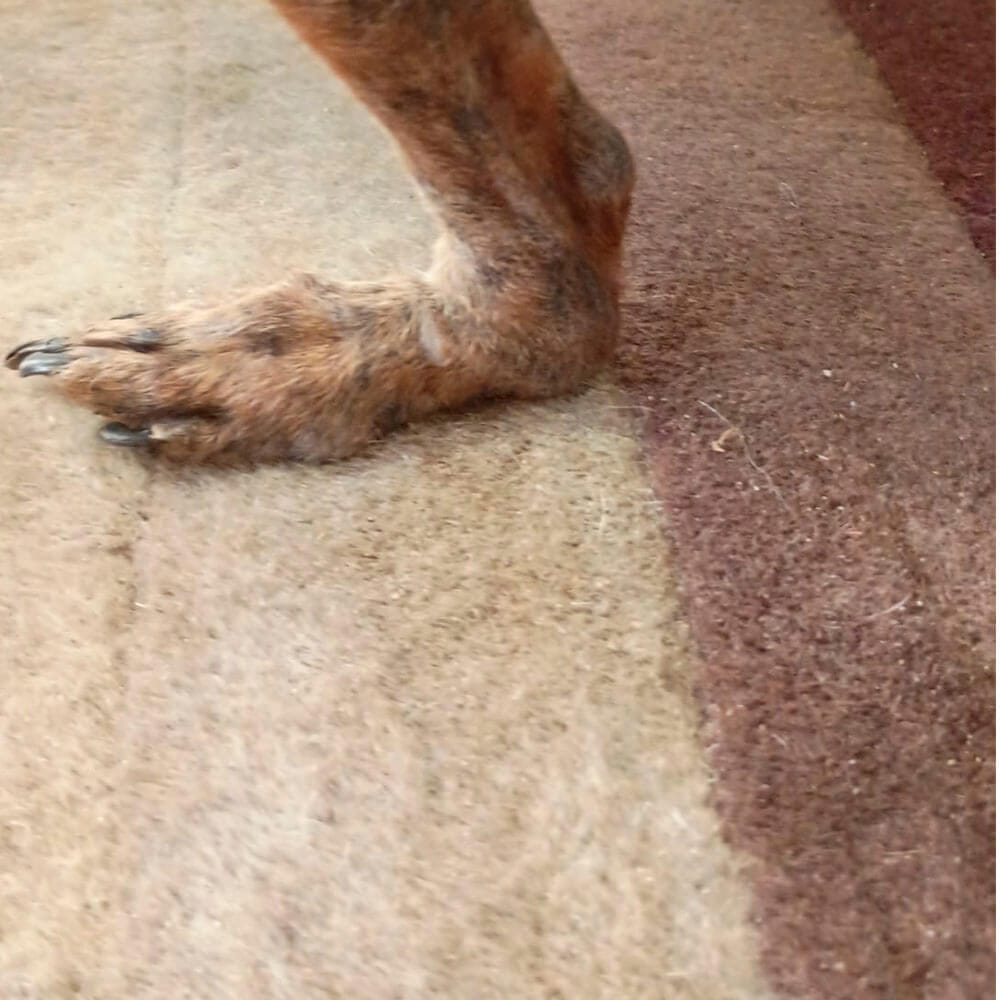
Clinical signs may vary according to the severity of the lesion, but the most common are:
abnormal hind leg support
collapse of the ankle to the ground
limp or unsteady gait
difficulty getting up
walking fatigue
If you observe these signs, it is important to consult a veterinarian to assess the joint.
Handling and stabilization options
Treatment of tarsal hyperextension in dogs depends on the origin of the problem and its severity.
In some cases surgery is considered, while in others conservative solutions are used to stabilize the joint.
Tarsal splints can act as an external support by limiting hyperextension and helping to maintain alignment during gait.
You can see an example of this type of support here:
https://mihapi.com/tienda/ortopedia-y-salud/ferulas/ferula-para-tarso-para-perros/
There are also complete hind limb stabilization solutions available such as:
https://mihapi.com/tienda/ortopedia-y-salud/ferulas/ferula-trasera-para-perros/
Correct measurement for a splint
When considering the use of a splint, it is essential to take the correct measurements to ensure a good fit.
In this guide we explain step by step how to do it:
https://mihapi.com/como-tomar-medidas-para-una-ferula-en-perros/
You can also learn the difference between technical sizing systems and customized splints in this article:
https://mihapi.com/ferula-personalizada-para-perros-vs-tallaje-tecnico/


Conclusion
Tarsal hyperextension in dogs can significantly affect the stability of the hind limb and the quality of life of the animal.
Detecting symptoms early and assessing different management options – from physical therapy to orthopedic supports – can help improve mobility and protect the joint.
For any suspected tarsal hyperextension in dogs, veterinary evaluation is always the first step to determine the most appropriate treatment.
Disclaimer
This content is for informational purposes only and is not a substitute for a veterinarian’s assessment.