
Why does my dog have weakness in the hind legs?
Weakness in a dog’s hind legs is one of the symptoms that most worries owners, and with good reason: it can be a sign of very different problems, from natural aging to neurological pathologies that require urgent attention. Knowing how to recognize the signs in time makes the difference between a complete recovery and a definitive loss of mobility.
This article is written for owners who notice changes in their dog’s gait and want to understand what is happening before going for a consultation. It is not a substitute for veterinary diagnosis, but it will help you to arrive better informed and to choose the most appropriate orthopedic aids for each situation.
Warning signs not to be ignored
Before delving into the causes, it is important that you know how to identify the signs that something is wrong with your dog’s hindquarters:
- Difficulty getting up after a break
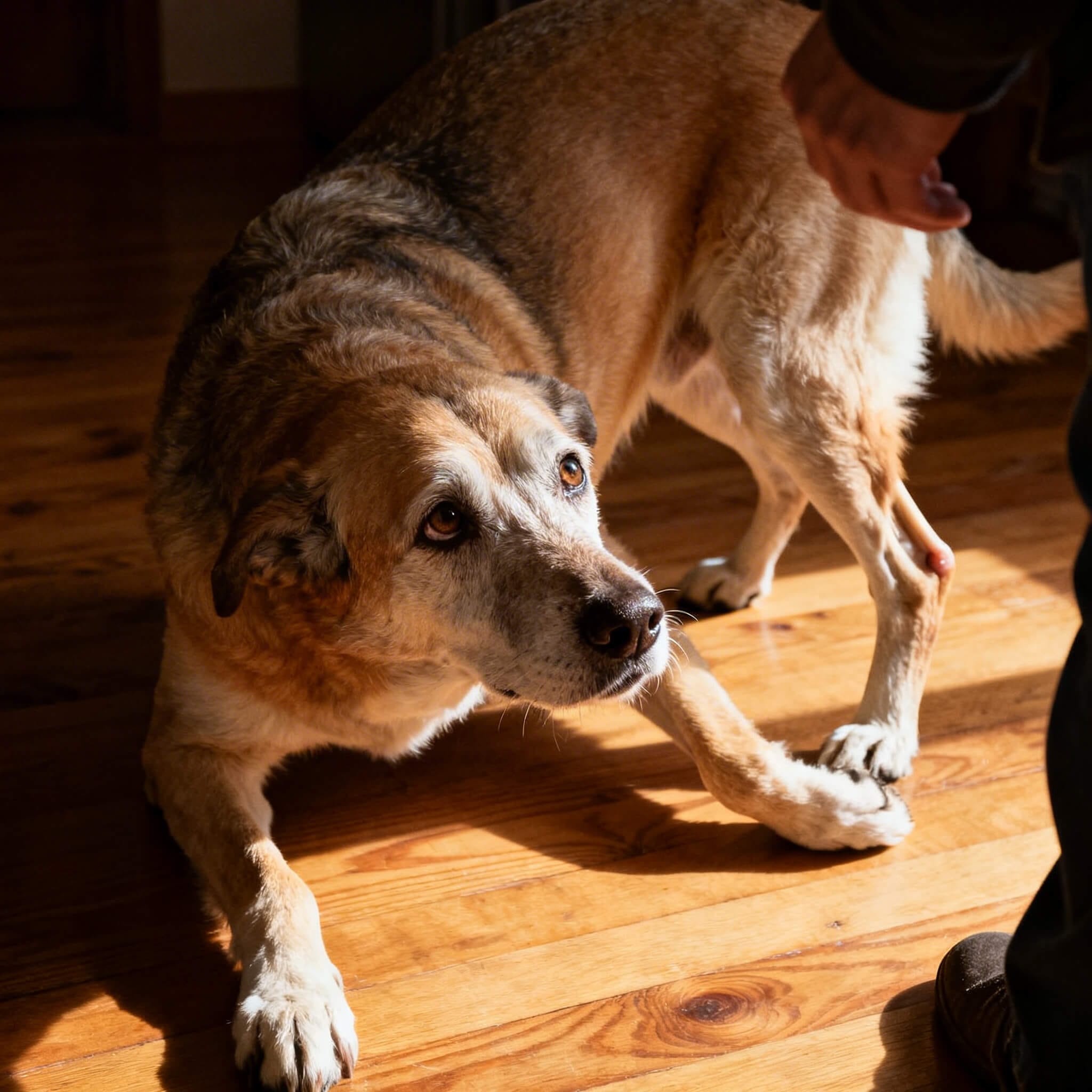
- Dragging of the legs or “scratching” of the ground when walking(knuckling)
- Staggering gait or instability when descending stairs
- Visible loss of muscle mass in thighs or hips
- Urinary or fecal incontinence associated with weakness
- Sudden falls without apparent cause
If your dog suddenly can’t walk on his hind leg, it’s a neurological emergency: according to the veterinary neurology specialists at SEV, sudden loss of motor function may indicate an acute herniated disc or late-stage degenerative myelopathy, and response time is critical.
The 7 most common causes of weakness in a dog’s hind legs
Hip dysplasia
It is one of the most common orthopedic pathologies, especially in large breeds such as the German Shepherd, Labrador or Golden Retriever. The hip joint forms abnormally, causing friction, inflammation and progressive pain. Hip dysplasia can be detected as early as 4-6 months of age, although the most obvious symptoms usually appear at maturity.
Dogs with dysplasia show a “rabbit” gait (jumping with both hind legs at the same time), refuse exercise and have difficulty getting up. Management combines physiotherapy, anti-inflammatories and, in many cases, orthopedic support such as the rear support harness for dogs, which relieves weight off the hip and facilitates ambulation.
2. Degenerative myelopathy
Degenerative myelopathy (DM) is a progressive neurological disease that affects the spinal cord and causes a gradual loss of motor function in the hind limb. It is especially prevalent in breeds such as the German Shepherd, Boxer or Corgi.
It starts with a slight instability that progresses to paresis and finally paralysis. The dog does not feel pain, but loses control of its limbs. The proprioceptive corrector for dogs can help maintain body awareness of the limbs and slow the progression of knuckling in the early stages.
3. Disc herniation (IVDD)
Intervertebral disc disease can cause from mild pain to sudden paralysis depending on the severity of the prolapse. Chondrodystrophic breeds such as the Dachshund, Beagle or French Bulldog are particularly vulnerable.
A herniated disc in the thoracolumbar area directly affects the coordination of the hind legs. If the onset is abrupt, it is a veterinary emergency. In subacute cases or after surgery, the use of a hind leg control band helps to maintain correct positioning during rehabilitation.
4. Arthrosis and aging
With age, joints naturally degenerate. The cartilage wears out, the production of synovial fluid decreases and pain appears, especially after rest. Osteoarthritis is not exclusive to large breeds: small and medium-sized dogs also develop it from the age of 7-8 years.
The older dog with hind limb weakness needs non-slip surfaces, access ramps, chondroprotective supplements and often a support harness to enable him to get up and walk with less effort.
5. Muscle atrophy due to disuse or disease.
When a dog reduces its activity due to pain, surgery or systemic disease, the muscles of the hindquarters rapidly atrophy. The loss of muscle mass creates a vicious cycle: less muscle means less stability, which leads to more pain and more immobility.
Active rehabilitation through physiotherapy, hydrotherapy and the use of functional orthoses is essential to break this cycle. Veterinary evaluation of limb weakness allows the design of a recovery plan adapted to each case.
6. Neurological diseases (spondylomyelopathy, tumors).
Some pathologies such as cervical spondylomyelopathy (Wobbler syndrome), spinal tumors or meningitis may cause hind leg weakness as a secondary symptom. These conditions require advanced diagnosis by MRI or CT.
If the weakness is accompanied by cervical pain, severe ataxia or loss of sphincter control, veterinary consultation is urgent and cannot be postponed.
7. Canine distemper and other systemic diseases
Although less well known, canine distemper can leave severe neurological sequelae including hindbrain weakness or paresis. The relationship between hind leg weakness and distemper is due to demyelination caused by the virus in the central nervous system.
Other systemic diseases such as hypothyroidism, diabetes or myasthenia gravis may also manifest with generalized muscle weakness especially affecting the hind limb.
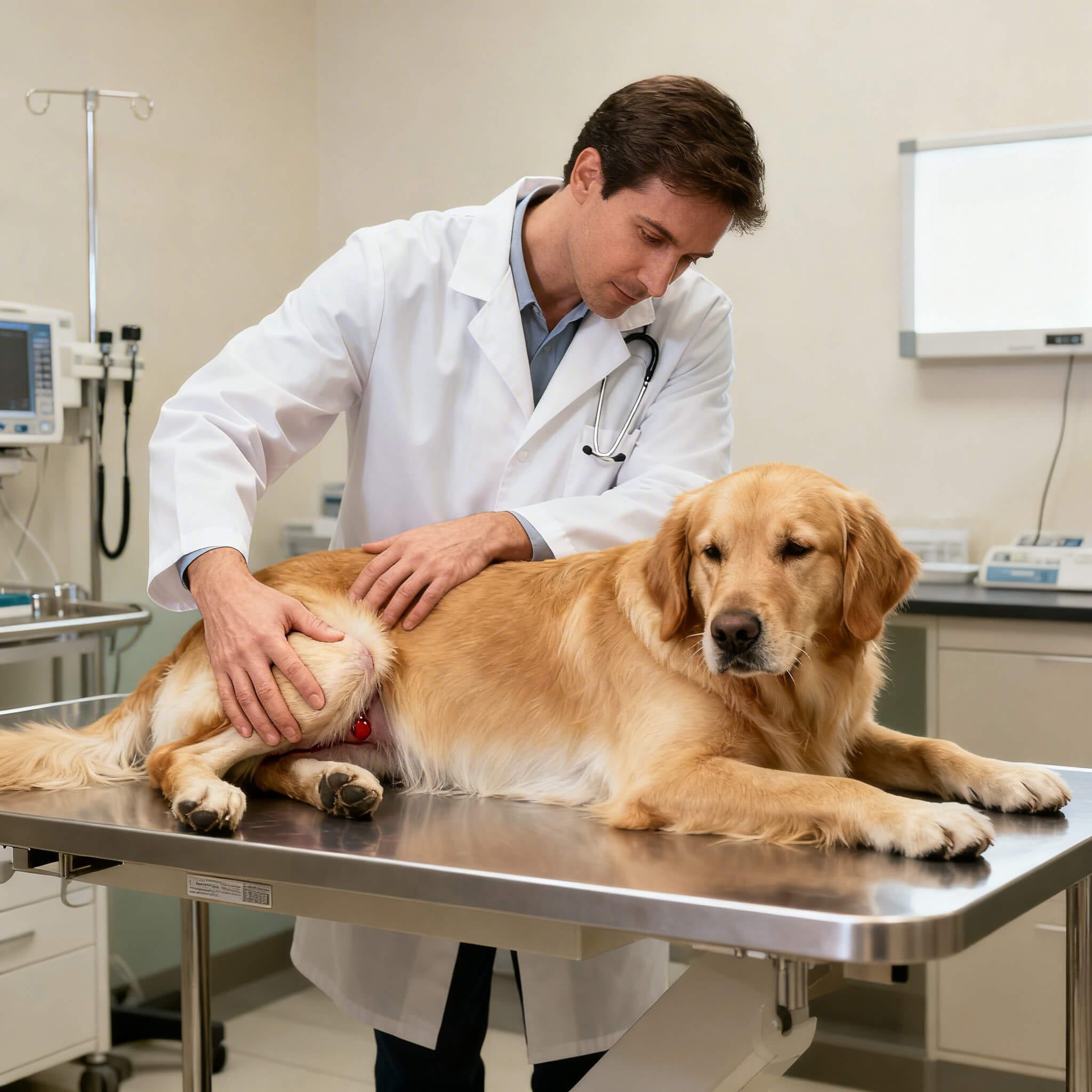
When should you go to the veterinarian urgently?
Not every weakness in the posterior train requires urgency, but there are signs that cannot wait for a scheduled appointment:
- Sudden paralysis: the dog does not move its hind legs at all.
- Severe pain: crying, inability to move, or antalgic posture (hunchback).
- Sudden incontinence: loss of urinary or fecal control without previous history
- Rapid progression: visible worsening in a few hours
- Previous trauma: fall, run over, or blow followed by weakness.
In these cases, go to the veterinary emergency department without delay. The prognosis for recovery in acute herniated discs, for example, depends directly on the number of hours between the onset of symptoms and surgery.
”Weakness in a dog's hind legs is not just a mobility problem: it is a signal from the body asking for help. Acting in time, with the right support, can restore the quality of life it deserves.
Orthopedic aids according to the clinical case: which one does your dog need?
Once the veterinarian has established the diagnosis, orthopedic aids complement the medical treatment and improve the animal’s quality of life. Not all situations require the same type of support.
Rear support harness: for loss of strength and reduced mobility
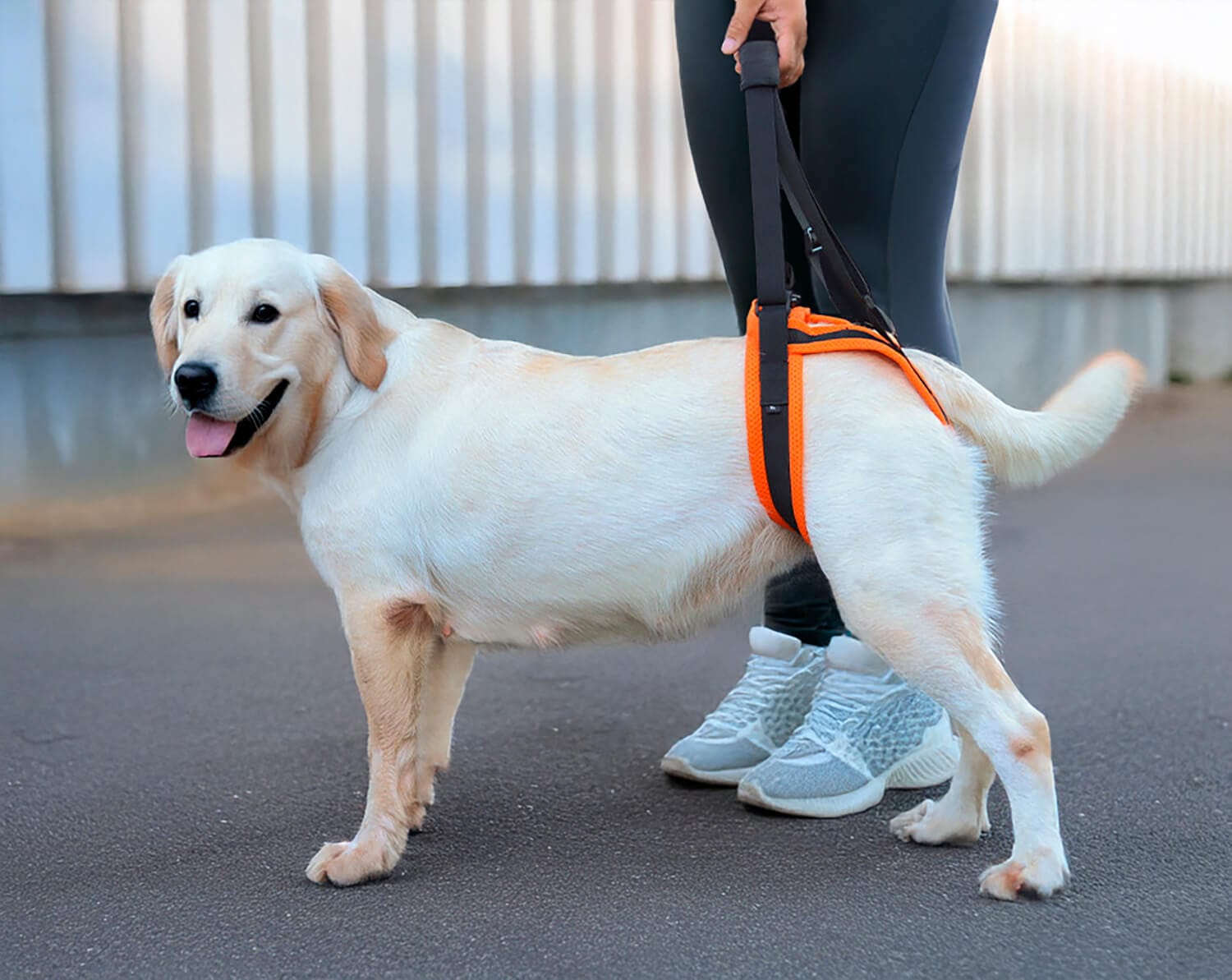
The rear support harness for dogs is designed for dogs with hip dysplasia, severe osteoarthritis, partial paresis or in postoperative recovery. It allows the caregiver to help the dog stand up, climb stairs or maintain balance while walking without putting pressure on the lower back.
It is especially useful for geriatric dogs that still have some residual strength but need occasional assistance. The harness distributes weight evenly and reduces the risk of falls.
Walkband or hind leg control band: for instability and mild knuckling
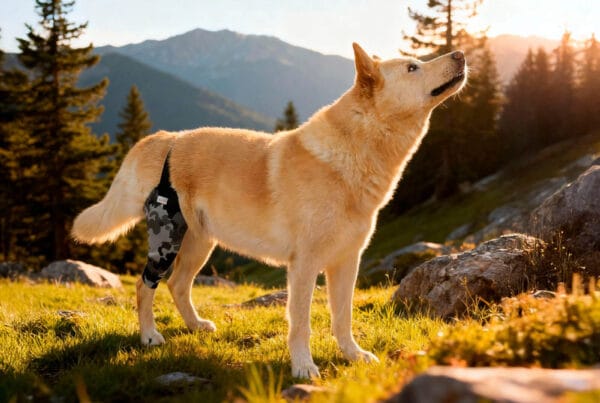
The hind leg control band acts as a functional acts as a functional stabilizer that limits uncontrolled hind limb movements. It is ideal in cases of mild instability, post-IVDDD recovery or when the dog tends to spread the legs excessively when walking.
Its lightweight, adjustable design allows it to be worn during daily walks without restricting natural range of motion.
Proprioceptive corrector: for knuckling and loss of body awareness
The proprioceptive corrector is indicated for dogs with early degenerative myelopathy, sequelae of disc herniation or any condition that causes knuckling (the paw bends inward when resting). It works by stimulating the receptors on the sole of the foot and helping the brain to “remember” the correct position of the limb.
It is a recognized rehabilitation tool in veterinary physiotherapy and can be used continuously during therapy.
Frequently asked questions about weakness in the dog’s hind legs
Is there a cure for weakness in the hind legs?
It depends on the cause. Orthopedic pathologies such as hip dysplasia or osteoarthritis have palliative treatment but no definitive cure, although quality of life can be greatly improved. Some neurological conditions treated early, such as a herniated disc, can have a complete recovery if treated in time.
Which breeds are more prone to hindlimb weakness?
The German Shepherd, Labrador Retriever, Golden Retriever, Rottweiler and Boxer are more predisposed to hip dysplasia and degenerative myelopathy. The Dachshund, Basset Hound and French Bulldog are especially vulnerable to intervertebral disc disease due to their body conformation.
Can I use a back support harness without a veterinary diagnosis?
The support harness is a safe orthopedic aid, but it is always recommended to get a diagnosis before using it. Your veterinarian will be able to tell you if the support is appropriate for your dog’s specific pathology and how to adjust it correctly so that it is effective and does not cause chafing.
Is hind leg weakness in young dogs normal?
It is not normal in young dogs and should always be evaluated. It may indicate developing dysplasia, congenital or infectious diseases. In large breed puppies, dysplasia can occur as early as 4-6 months of age. Consult your veterinarian for any signs of lameness or instability in a young dog.
Does exercise worsen hind leg weakness?
Poorly planned exercise can make the situation worse, but controlled movement is essential to maintain muscle mass and joint mobility. Ideally, work with a veterinarian or animal physiotherapist to design an adapted routine: short walks, therapeutic swimming and proprioception exercises are usually part of the treatment.
How can I help my dog at home while waiting for the consultation?
Place non-slip mats to prevent falls, limit access to stairs, facilitate access to bed and couch with ramps, and reduce impact exercise. If the dog tends to knuckle when walking (knuckling), a proprioceptive corrector can alleviate the situation on an ad hoc basis while you obtain a diagnosis.
Conclusion: act before weakness limits your life.
Weakness in the dog’s hind legs rarely goes away on its own. The sooner the cause is identified and a management plan established, the better the prospects for recovery or stabilization. Veterinary diagnosis is the first step, but proper orthopedic support makes a difference on a day-to-day basis.
At mihapi.com you will find a selection of veterinary orthopedic products designed to accompany your dog in every phase: from the first sign of instability to post-operative rehabilitation.
- Rear Support Harness – for dogs with loss of strength and need for walking assistance
- Rear Leg Control Band (Walkband) – for instability and postoperative recovery
- Proprioceptive corrector – for knuckling and loss of body awareness
If you have any doubts about which product is best suited to your dog’s situation, do not hesitate to contact our team. We are here to help you make the best decision for your dog’s well-being.