
Why do so many dogs suffer from knee problems?
The dog’s knee – also called the patellofemoral joint – is one of the most vulnerable areas of the canine locomotor system. Medium and large breeds, active dogs and overweight animals are especially prone to injuries in this area.
The most common problem is the rupture of the cranial cruciate ligament, the equivalent of the human anterior cruciate ligament. But patellar luxation, osteoarthritis and chronic joint inflammation are also common. Faced with this scenario, more and more owners are asking themselves: are knee pads for dogs effective?
In this article we answer this question rigorously, explain for which situations they are indicated and help you choose the most suitable option for your partner.

What is a knee brace for dogs and how does it work?
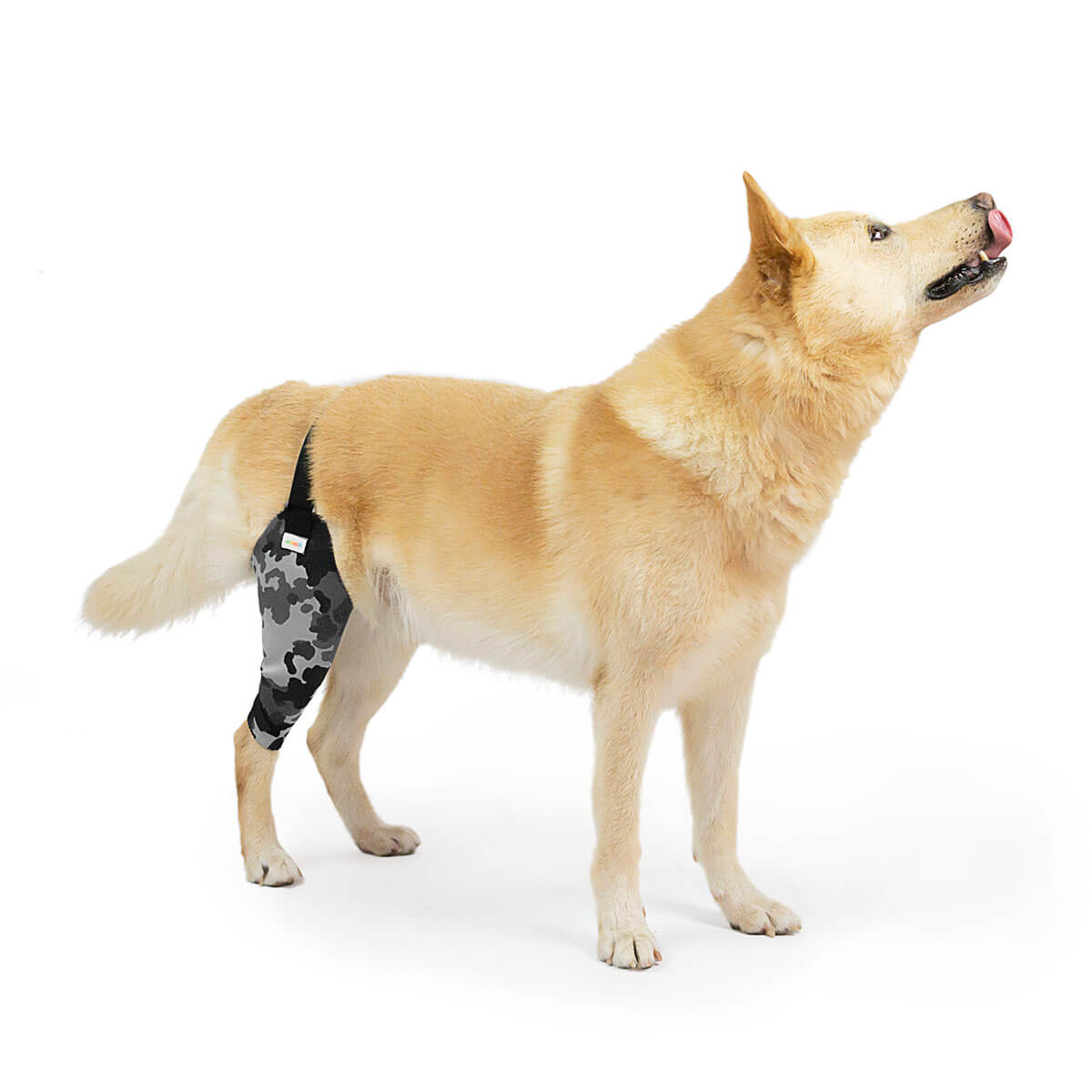
A knee brace for dogs is an external orthopedic device that fits around the animal’s knee joint. Its main function is to stabilize, compress and protect the affected joint, reducing the abnormal movement that generates pain and inflammation.
Quality canine knee pads, such as the Mihapi dog knee protector, combine technical materials – neoprene, rigid side reinforcements and adjustable fastening systems – to provide a firm hold without restricting the animal’s natural mobility.
To better understand the anatomy involved, you can consult this atlas of veterinary anatomy of the dog knee, which shows in detail the structures that the knee brace protects.
The mechanism of action is based on three principles:
- Controlled compression: reduces inflammation and improves proprioception (the body’s perception of the joint).
- Lateral stabilization: limits varus and valgus movements that damage cartilage and ligaments.
- Partial unloading: redistributes body weight to relieve pressure on the injured area.
For which pathologies and situations are knee pads for dogs effective?
Not all canine knee injuries respond equally to a brace. Knowing the specific indications is key to maximizing its effectiveness.
Cranial cruciate ligament rupture or strain.
This is the most common indication. When the cruciate ligament is partially torn – or there is instability without complete rupture – the knee brace acts as an external support for the damaged ligament, stabilizing the tibial box and allowing the dog to support the limb with less pain.
In mild partial tears, many veterinarians opt for a conservative protocol that includes rest, physical therapy and the use of a knee brace. If your case is at that crossroads, the article Cruciate ligament in dogs: to operate or not? can guide you on the options available.
Osteoarthritis and chronic joint degeneration
In older dogs with osteoarthritis of the knee, the knee brace does not cure joint wear and tear, but it does reduce functional pain and improve quality of life. The gentle compression and heat generated by the neoprene promotes local circulation and relieves morning stiffness.
Patella dislocation (grades I and II)
In mild dislocations, the knee brace can help center the patella during movement and reduce episodes of intermittent lameness, especially in predisposed small breeds such as the Yorkshire, Pomeranian or Chihuahua.
Postoperative recovery
After interventions such as TPLO or TTA (surgical techniques for cruciate ligament), the knee brace is used during the rehabilitation phase to protect the operated area, reduce edema and accelerate the return to normal activity. You can read more in our article on cruciate ligament rupture in dogs.
Prevention in high risk dogs
Breeds such as the Rottweiler, Labrador, Bulldog or Boxer are genetically predisposed to knee injuries. In these cases, the preventive use of a knee brace during high-intensity activities – jumping, running on uneven terrain – can significantly reduce the risk of injury.
”A well-fitted knee brace is no replacement for a veterinarian, but it can make the difference between a dog in pain and one that enjoys his walks again.
Advantages of the knee brace over other orthopedic solutions
The question most often asked by owners is: why a knee brace and not surgery directly? The answer is not one or the other, but understanding when each option provides the most value.
- Non-invasive: Unlike surgery, the knee brace does not require anesthesia, hospitalization or a long recovery period.
- Affordable cost: Cruciate ligament surgery can exceed €2,000 per limb. A quality knee brace is a fraction of that cost.
- Complementary to rehabilitation: It can be combined with physiotherapy, hydrotherapy or electro-stimulation without any problem.
- Immediate use: From the first day of diagnosis, the knee brace can relieve pain while other options are evaluated.
- Adaptable: Adjustable fastening systems allow it to adapt as the dog’s musculature recovers or the volume of the area changes.
It is important to emphasize that the effectiveness of knee pads for dogs depends on correct fitting and proper sizing. A poorly fitted knee brace can cause chafing or even worsen the injury. Therefore, we always recommend consulting a veterinarian before use.
Frequently asked questions about knee pads for dogs
How long should my dog wear the knee brace each day?
In most protocols of use, it is recommended to start with sessions of 2 to 4 hours per day during the first days for the dog to get used to it. After that, it can be worn during walks and times of activity, removing it at rest. Always follow your veterinarian’s instructions.
Can my dog wear the knee brace at night?
In general, its use at night is not recommended, since the joint needs periods of rest without compression to recover properly. Consult your specialist if your case requires a different protocol.
Is the knee brace sufficient to treat a cruciate ligament tear?
It depends on the degree of injury. In partial tears or mild injuries, it can be an effective solution as part of a conservative treatment. In complete tears with severe instability, surgery is usually necessary. Read our article “To operate or not to operate on the cruciate ligament of the dog? for decision criteria.
How do I know if the size is correct?
The knee brace should be firm but not overly compressive: it should not shift during movement or cause redness or chafing after use. Most manufacturers offer measurement guides based on knee circumference and bone length.
Are knee pads for dogs effective for all breeds?
Yes, as long as you choose the right size and model. There are specific knee braces for small, medium and large breeds. The success of the treatment depends more on the correct diagnosis and consistency of use than on the size of the dog.
Can knee pads be used preventively?
Yes, in predisposed breeds or dogs with intense physical activity, preventive use during demanding exercise may reduce the risk of joint injuries. Consult your veterinarian if your dog meets the risk profile.