
Why is the right size so important?
Knowing how to size a dog wheelchair is the most decisive step in the whole purchasing process. A poorly sized chair is not only inefficient: it can generate chafing, pressure on the wrong points of the body and even worsen the animal’s posture in the medium term.
Unlike conventional clothing or harnesses, a wheelchair transmits the full weight of the hindquarters through the frame and harness. Therefore, measurements must be accurate and taken directly on the dog’s body, without clothing or accessories. If your veterinarian has already given the go-ahead to use the chair, check first which type of chair he has recommended before you start measuring: rear or front, as the measurement protocol differs on key points.
In this guide you will find the complete protocol with the four fundamental measurements for the back seat, the specific measurements for the front seat and the most frequent mistakes to avoid. To measure a dog for his wheelchair, 4 key measurements are needed: hip height, body length, hip width and weight. Accurate measurements ensure comfort and efficiency.
The 4 fundamental measurements for the rear wheelchair
The rear wheelchair is the most prescribed model for dogs with hind limb paralysis or weakness. To size it correctly you need four anatomical measurements taken with the dog in a standing or upright position.
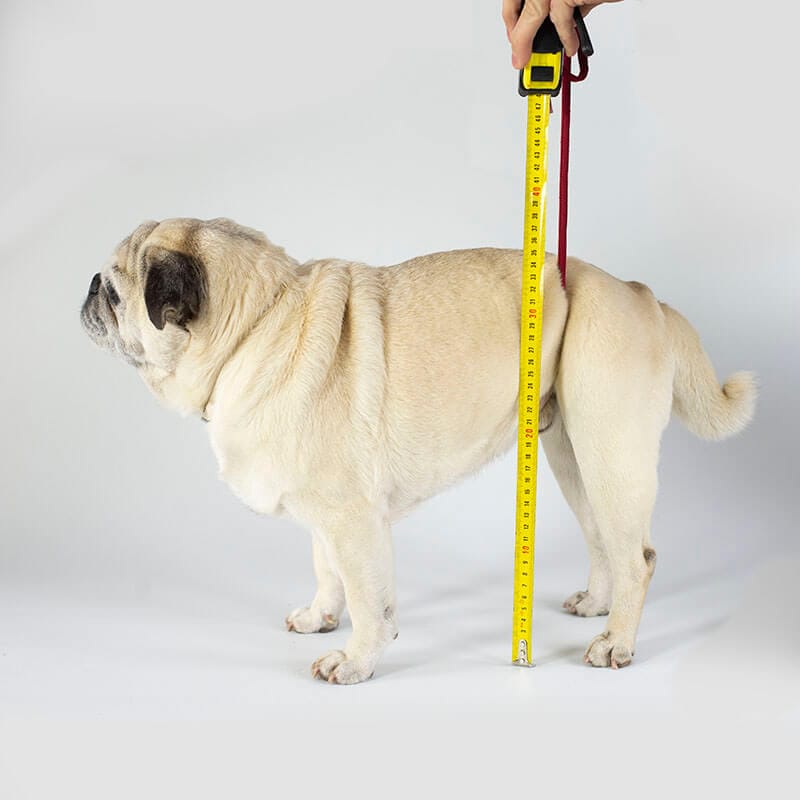
Measurement A – Hip height
With the dog standing, measure the vertical distance from the ground to the top of the hip bone (iliac crest). This is the most critical measurement: it determines the height at which the support harness will support the hindquarters. If the harness is too low, it will put pressure on the abdomen; if it is too high, the dog will drag the hind legs instead of hanging in a natural position.
Measurement B – Distance between hips
Measure the width between the two hip bones (iliac tuberosities), placing the tape horizontally. This measurement determines the width of the rear frame so that the chassis does not press on the animal’s flanks and is not so wide that the dog loses lateral stability during movement.
Measurement C – Body length
Measure from the base of the neck (last cervical vertebra) to the base of the tail, following the dorsal line of the animal. This measurement helps to size the longitudinal support of the chassis and to correctly position the connection point between the pectoral arch and the rear frame.
Measurement D – Chest circumference
Measure the widest circumference of the chest, passing the tape behind the front legs and above the sternum. This is the measurement that determines the size of the chest strap or arch that acts as a front anchor point and distributes some of the weight when the dog is in motion. In the wheelchair for small dogs, this measurement is especially critical because the adjustment margins are smaller.
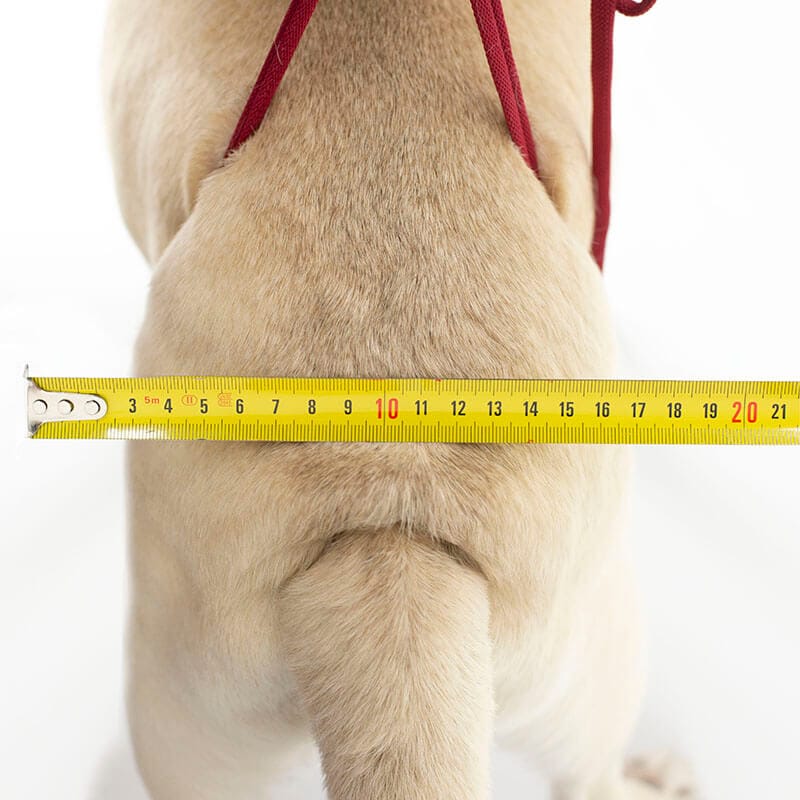
Hip width
Using a string or a cloth to hold it up, you should measure the width of the hip with a rigid meter taking a certain distance to take the picture.
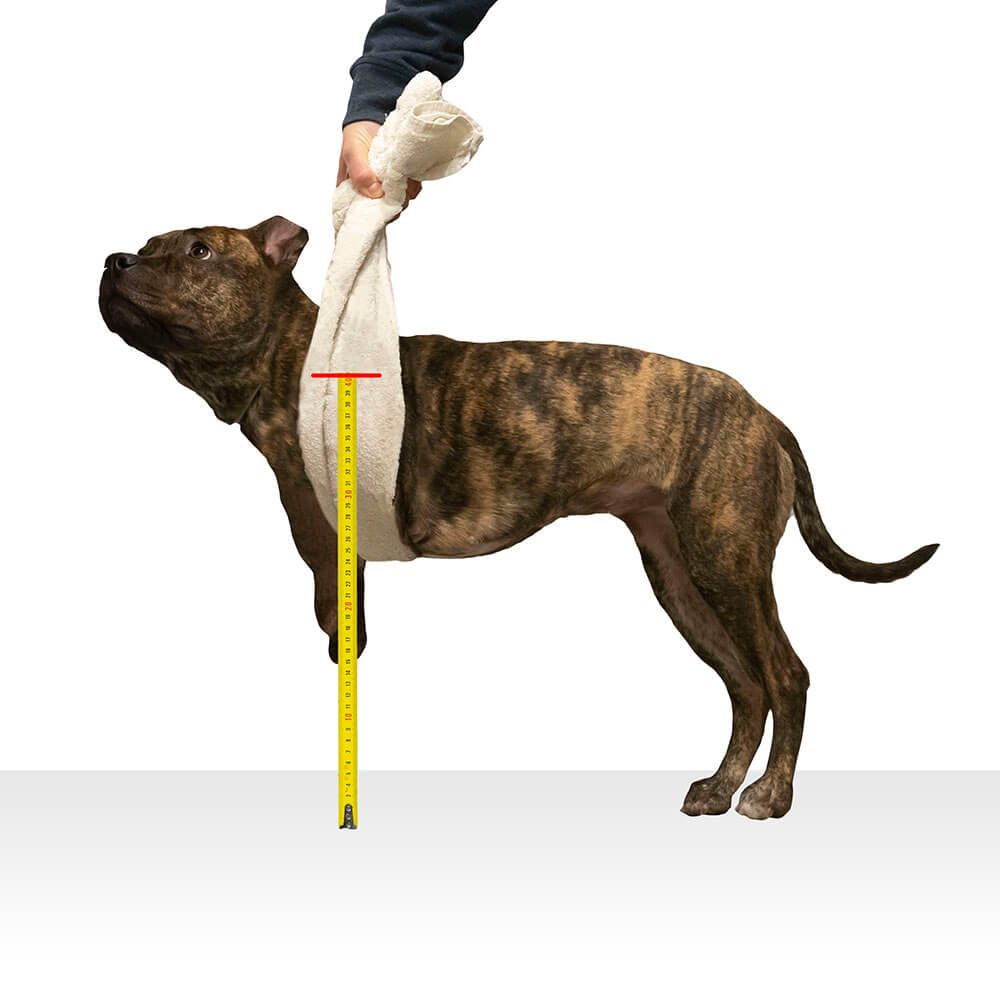
Hip height
Again with the help of a string, place a rigid tape measure vertically to the floor to measure groin height and total hip height.
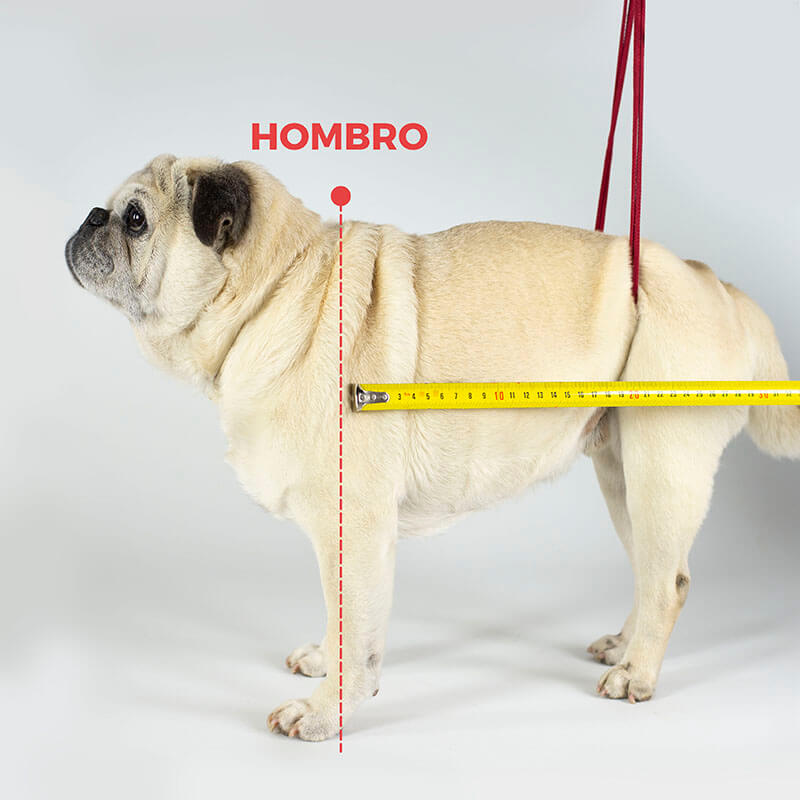
Hip – Shoulder
Again with the tape measure horizontal, measure the total distance from your shoulder to past the end of your hip.
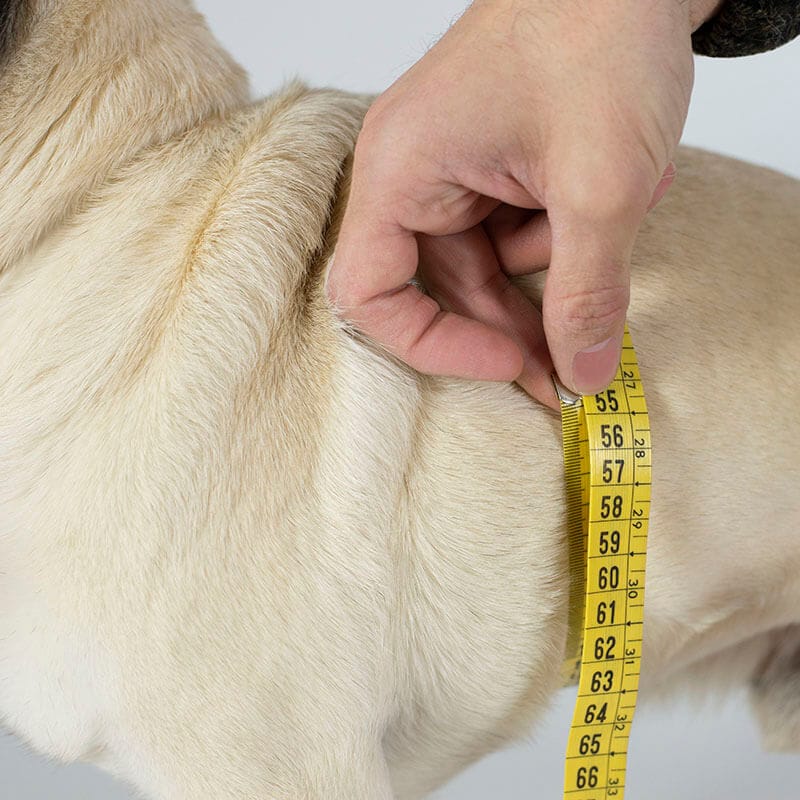
Chest circumference
With a flexible tape measure you should take the widest measurement of the chest, usually about two or three fingers behind the armpit.
Specific measurements for the front wheelchair
If the dog needs a front wheelchair because of paralysis or weakness of the front legs, the measurement protocol changes because the load and support points are shifted to the neck, shoulders and chest. The three key measurements for this model are elbow to ground height, width between the front legs and neck circumference.
Elbow to ground height: measures the vertical distance from the elbow joint to the ground when the dog is in the natural position. This measurement determines the height of the front supports of the chassis and is the equivalent of measurement A of the rear saddle. An error in this point will result in the animal being in a forced shoulder posture or the front wheels not contacting the ground correctly.
Width between the front legs: measures the horizontal distance between the two front legs at the elbow. This measurement sizes the front arch clearance so that the frame fits between the legs without rubbing or compressing them during movement. A Mihapi front wheelchair is adjusted at this point by means of sliding rods to adapt to the exact morphology of the animal.
Neck circumference: measure the circumference of the neck at its widest part, without tightening the tape. This measurement allows adjustment of the support collar without compromising the trachea or neck vessels. It is a critical safety measure, especially in dogs with cervical neurological problems where the tissue may be sensitized.
Height
Place the rigid meter vertical to the floor to measure the height at which the chair should go. If it does not have front limbs, take the measurement so that the spine is in a natural position with the help of a cloth or towel.
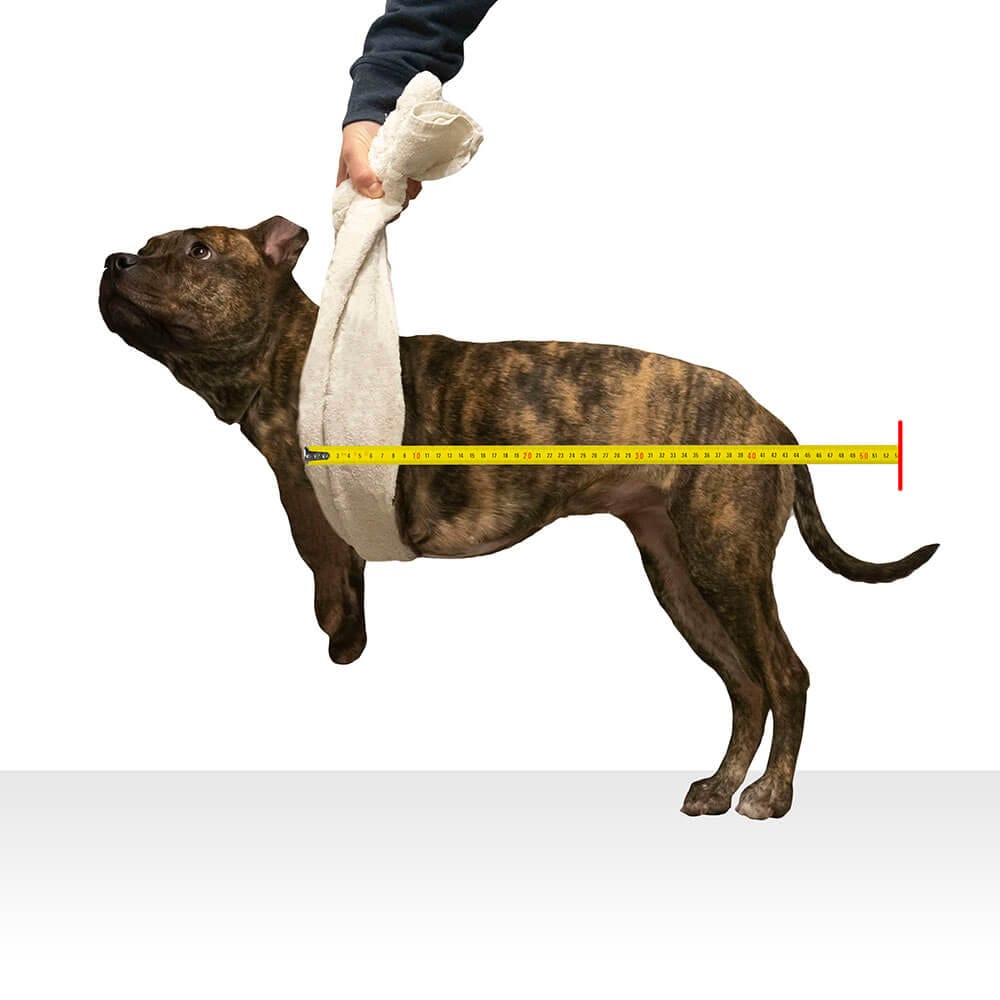
Length
With the tape measure horizontal, measure the total distance from your shoulder to past the end of your hip.
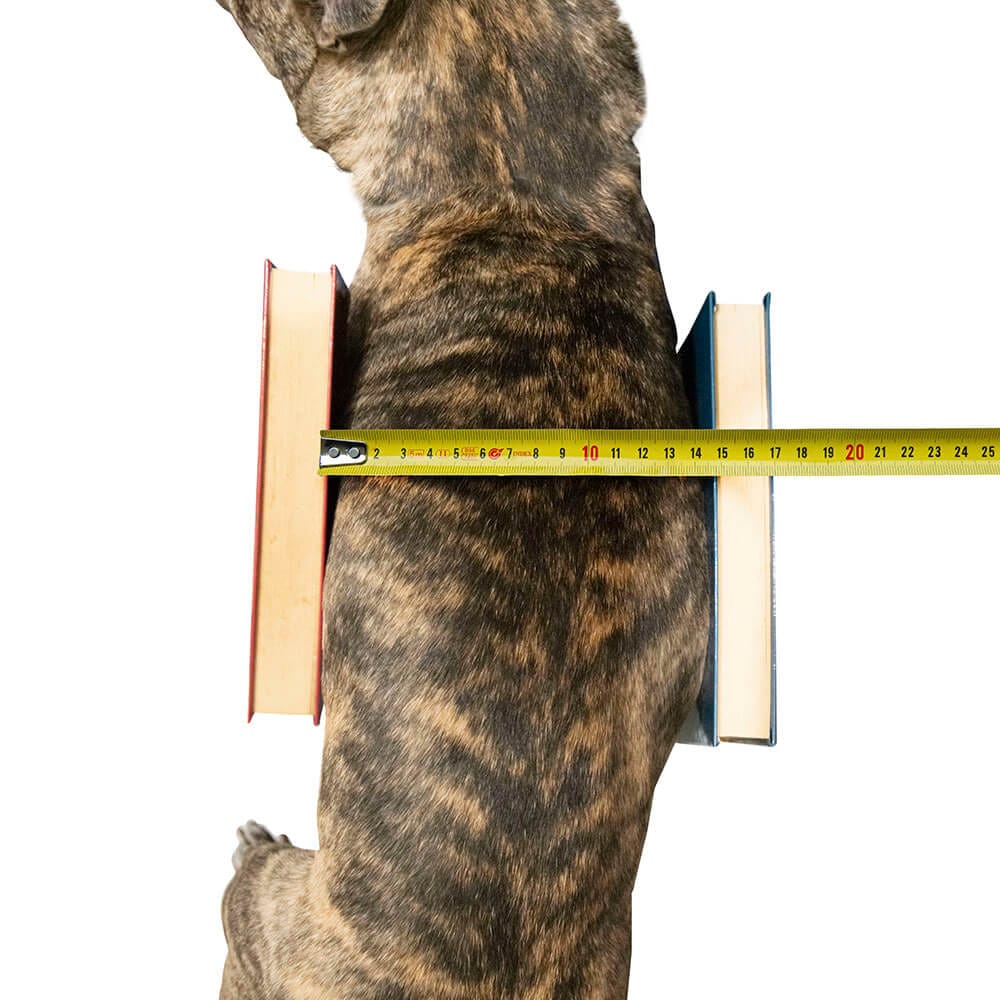
Width
We need to know as accurately as possible the maximum width of the chest. A good way to do this is to use two flat objects such as two books and measure the distance between them.
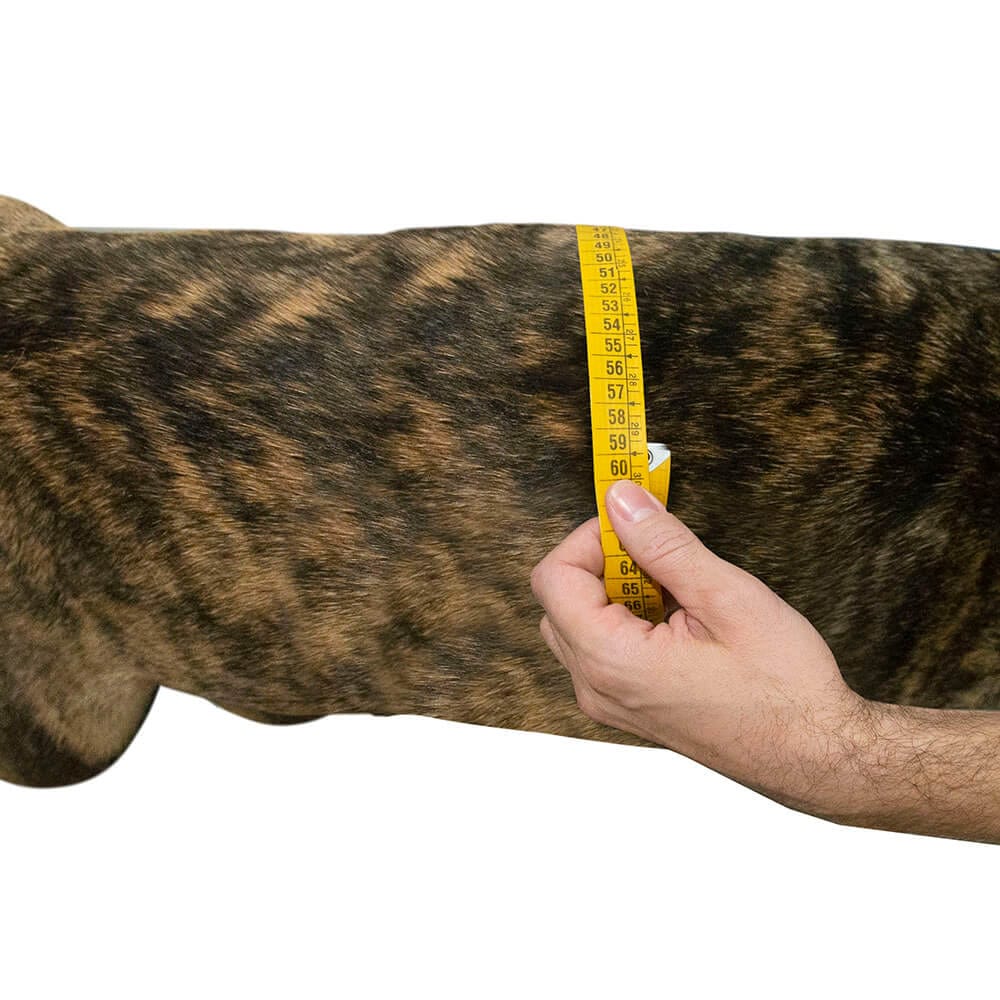
Chest circumference
With a flexible tape measure you should take the widest measurement of the chest, usually about two or three fingers behind the armpit.
The weight of the dog does not determine the size of the saddle: two dogs of the same weight may need completely different sizes. Always measure, never estimate.
The 4 most common mistakes when measuring a dog for wheelchairs
Knowing the common mistakes is as important as knowing the correct protocol. These are the four mistakes that most often cause a chair to arrive in the wrong size.
Measure the dog lying down instead of standing. Measurements taken in lateral recumbency are not equivalent to measurements taken while standing. Gravity alters joint position, the muscles relax, and anatomical reference points change. If the dog cannot stand on its own, ask another person to hold the dog upright while you take each measurement.
Use weight as the only size reference. Weight is one of the least reliable indicators when sizing a dog wheelchair. A Dachshund and a Cocker Spaniel may weigh exactly the same but require completely different sizes due to their body proportions. Direct anatomical measurements are the only reliable criterion.
Do not repeat each measurement at least twice. The measuring tape may shift, the dog may move slightly, or the anatomical reference point may not be perfectly located on the first attempt. Always repeat each measurement twice and use the average value if there is any discrepancy. A one-centimeter error in hip height can make the difference between a wheelchair that works properly and one that creates pressure points.
Measure with clothing, diaper or harness on. Any layer of fabric between the measuring tape and the dog’s body adds millimeters that distort the actual measurement. Always take the measurements directly on the dog’s coat, without any accessories. See the study published in Frontiers in Veterinary Science on the most common complications caused by poorly fitted dog wheelchairs.
What do I do if my dog cannot stand up to take measurements?
In dogs with total hind limb paralysis, obtaining a standing position may require assistance. The most reliable way is for a second person to hold the animal upright by holding it by the abdomen with both hands while the other person takes the measurements. It is not necessary for the dog to hold for a long time: 15 to 20 seconds is enough to take all four measurements if you have a clear protocol.
If you do not have help at home, another option is to place the dog in sternal decubitus (face down, with the legs in a natural position) on a firm surface and take the measurements in that position, taking into account that the hip height may be slightly underestimated with respect to the upright position. In this case, add 0.5 to 1 cm to measurement A as a correction margin.
In Mihapi you can send us the measurements of your dog along with reference photographs by WhatsApp and our team will confirm the size before you place any order. You can also check the prices and models available in our guide on how much a wheelchair for dogs costs to have all the information before deciding.
Frequently asked questions on how to measure dog wheelchair size
Can I use the dog’s weight measurements to choose the size?
No. Weight is an indicative indicator but never sufficient to choose the size of a wheelchair. Two dogs of the same weight can have completely different body proportions. The only reliable method is to take anatomical measurements directly on the animal’s body following the protocol described in this article.
What type of tape measure should I use to measure my dog?
Use a flexible sewing tape measure of the type used in tailoring. Rigid hardware store tapes do not adapt to the curves of the animal’s body and can generate incorrect readings in measurements such as chest circumference or distance between hips. The tape should be in good condition, without deformation or worn marks.
Do the measurements change if the dog gets fat or thin during treatment?
Yes, they can change. Especially chest circumference and hip distance are sensitive to significant weight variations. If the dog loses or gains more than 10% of its body weight during the period of use of the saddle, it is advisable to repeat the measurements and check the adjustment of the harness. Regular veterinary follow-up will facilitate this control.
How many times should I repeat each measurement?
Take each measurement a minimum of two times. If the two values match, that is the correct data. If there is a difference of 1 cm or more between the two measurements, repeat a third time and use the median of the three values. Repetition is especially important for measurement A (hip height) and chest circumference, which are the two points of greatest impact on the final fit.
What do I do if my dog’s measurements are between two sizes?
In case of doubt between sizes, the general recommendation is to opt for the larger size and adjust the harness inwards. A slightly larger harness is easier to adjust than one that fits snugly, where the margin of correction is minimal and the risk of chafing increases. If in doubt, check with the manufacturer before ordering: at Mihapi we check each customer’s measurements before confirming the size.
Should I take the measurements myself or can the veterinarian do it?
Either option is valid. The important thing is to follow the correct protocol. Some rehabilitation veterinarians already include wheelchair measurements as part of the consultation. If you do it yourself at home, follow the steps described in this article and send the measurements to the manufacturer for validation before purchasing. Once you have the chair, we explain everything about the day-to-day in our guide to dog care once the chair arrives.
The next step: choosing the right model with your measurements in hand
Once you have the correct measurements, the model selection process is much simpler. The American Kennel Club describes in its guide to dog wheelchairs the general selection criteria that veterinary specialists recommend to consider beyond size.
In Mihapi you have available models for all size ranges and for both types of paralysis. You can see the whole range of chairs with their size charts at see the whole range of wheelchairs for dogs →