
Why do dog physiotherapy exercises at home make a difference?
When a dog loses strength or coordination in its hind legs, owners quickly become concerned. The good news is that dog physiotherapy exercises at home are a powerful and accessible tool that complements any veterinary treatment, whether pharmacological, surgical, or supportive.
Active and controlled movement stimulates the muscles of the hind limbs, improves proprioception —the dog’s ability to know where its limbs are in space— and accelerates functional recovery. The goal is not to replace the veterinary physiotherapist, but to extend their work in the environment where the dog feels safest: its own home.
In this article you will find 7 practical, progressive and safe exercises, organized by difficulty level, so you can apply them confidently as part of your dog’s rehabilitation protocol.
Which conditions benefit from these exercises
Not all dogs that perform physiotherapy at home do so for the same reason. Understanding the origin of the problem helps select the most appropriate exercises and respect recovery times.
Weakness and instability in the hind limbs
Progressive loss of strength in the hind legs can have multiple causes: osteoarthritis, spinal compression, peripheral neuropathies or simply aging. In these cases, dog physiotherapy exercises at home aim to maintain muscle mass, improve balance and slow functional deterioration.
If your dog shows signs of hind limb weakness, you can learn more about the most common causes and available supports on our page about hind leg weakness in dogs hind leg weakness in dogs.
Postoperative recovery of hip and spine
After a surgical procedure —such as hip luxation, dysplasia or intervertebral disc surgery— active rehabilitation is part of the medical protocol. In the first days support is mainly passive, but once the veterinarian allows it, incorporating active and controlled movement is essential to regain function.
If your dog has recently undergone surgery, consult the detailed guide on postoperative recovery after hip surgery in dogs before starting any exercise.
Puppy swimmer syndrome
Puppies with this syndrome are unable to coordinate their limbs and maintain a quadrupedal position. Early physiotherapy —including exercises at home— is one of the pillars of treatment and can determine the long-term prognosis. You can learn more in our article about swimmer puppy syndrome in dogs.
”Home physiotherapy does not replace the veterinarian: it complements their work. Every well-performed exercise is a session gained on the path to recovery.
7 dog physiotherapy exercises at home to strengthen the hind limbs
Before starting, keep these general recommendations in mind: perform the exercises on non-slip surfaces, work in short sessions of 5 to 15 minutes, reward with positive reinforcement, and stop if you observe pain, excessive trembling or refusal to continue.
Studies available in the scientific literature, such as those published on Dialnet about physiotherapy in domestic animals and the papers collected on ResearchGate on canine physiotherapy and mobility, confirm that active physical rehabilitation significantly improves functional outcomes in dogs with neurological and orthopedic conditions. The review published on SciELO Peru on physiotherapeutic treatment in canines also provides evidence supporting reproducible rehabilitation protocols in home environments.
1. Walking on unstable surfaces
Place a firm cushion, a rolled yoga mat or a balance pad on the floor and encourage your dog to walk slowly over them. Instability forces the nervous system to activate stabilizing muscle groups in the pelvis and thighs.
Duration: 3–5 minutes. Frequency: 1–2 times per day. Ideal for dogs with mild weakness or maintenance therapy.
2. Controlled uphill and downhill ramp walking
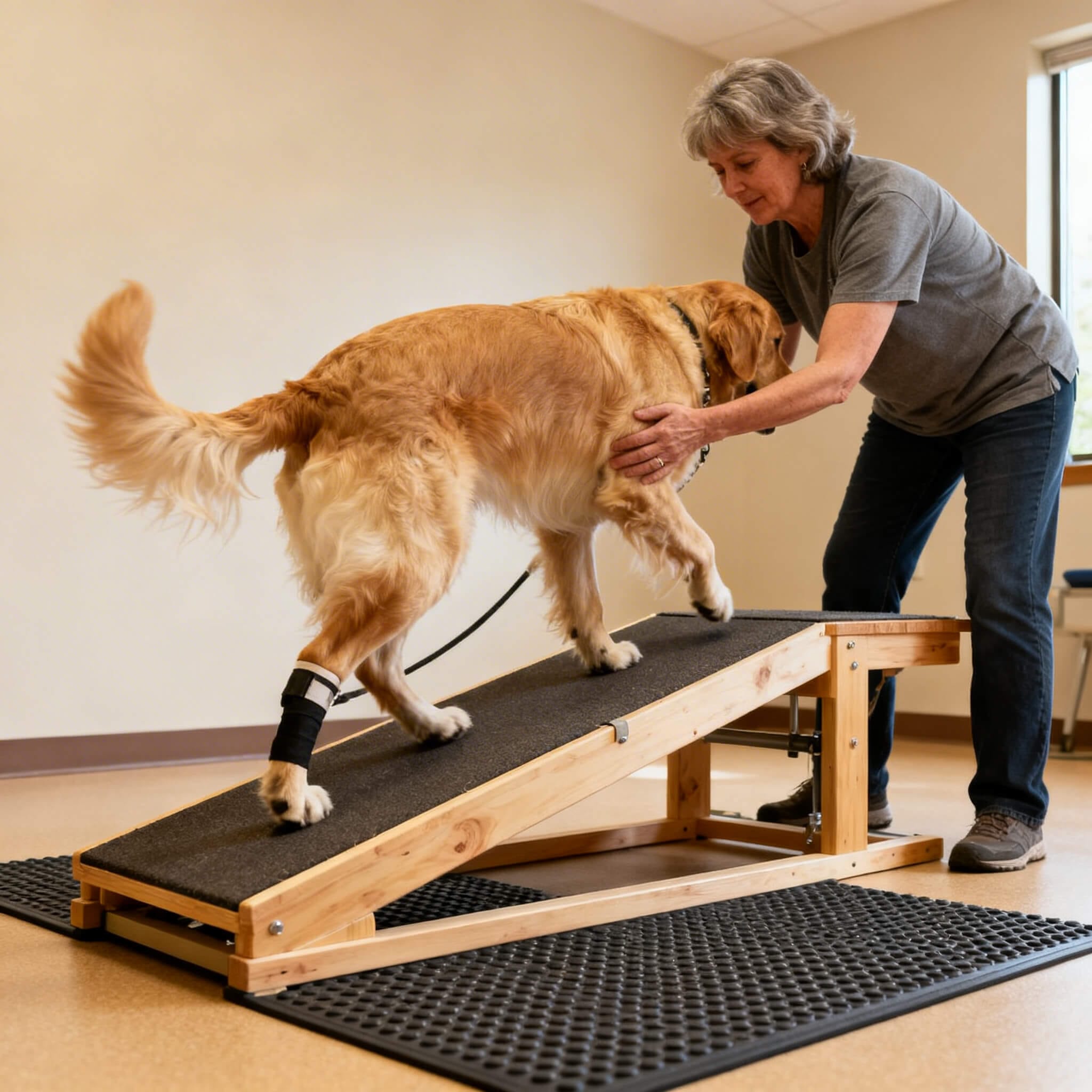
A wooden ramp with an inclination between 15° and 25° forces the dog to progressively load weight onto its hind limbs when going up, and to actively brake when going down. Slow descent is particularly valuable because it works eccentric contraction, which is essential for joint stability.
Technical tip: the owner should assist the movement with a hand under the abdomen during the first days, gradually removing support.
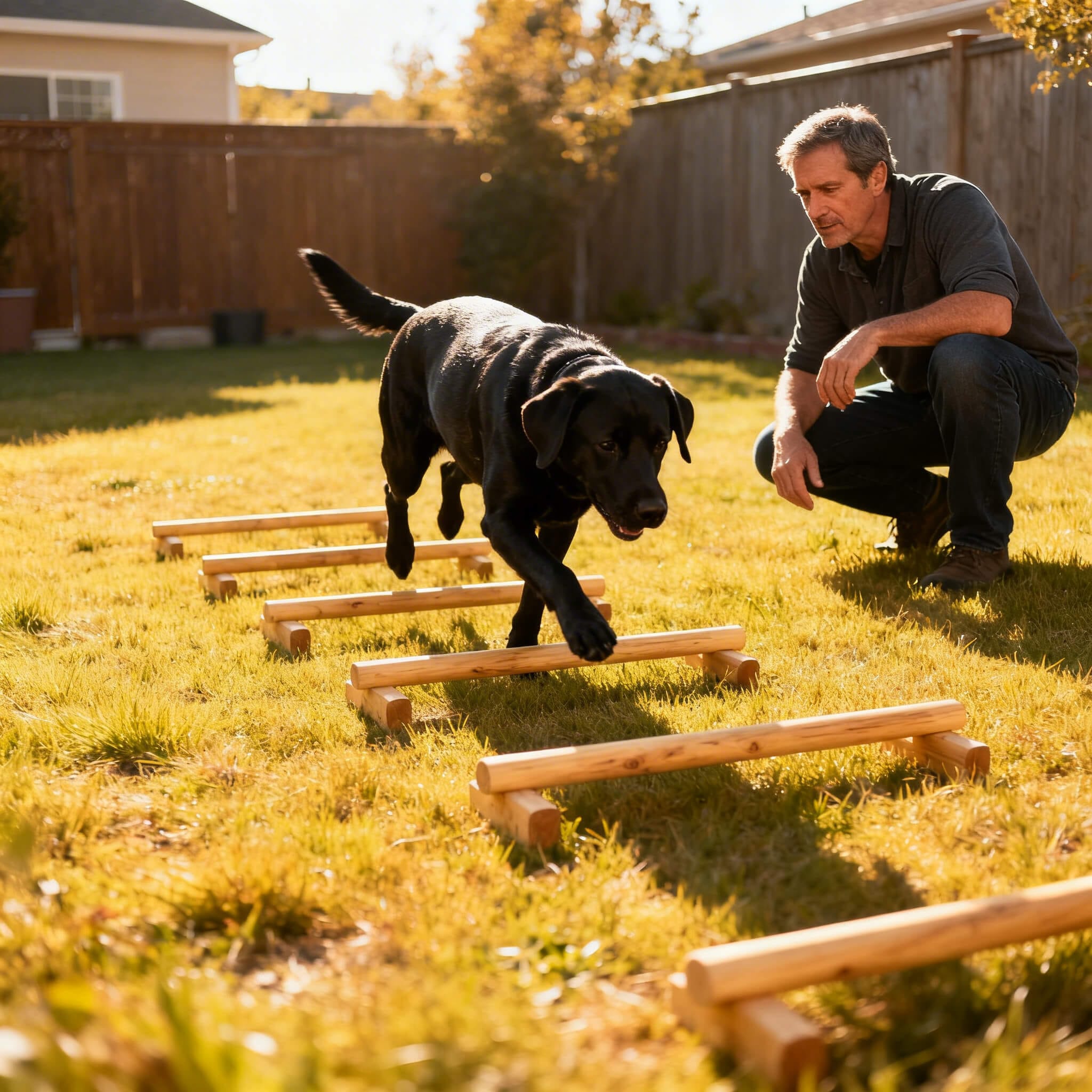
3. Cavaletti: stepping over low bars
Place 3 to 6 sticks or water bottles on the floor spaced roughly the length of the dog’s stride. When walking over them, the dog must consciously lift each paw, improving proprioception and neuromuscular coordination.
This exercise is especially recommended in intermediate postoperative recovery stages and in dogs with mild ataxia.
4. Sit-to-stand exercise
Ask the dog to sit and, after 2–3 seconds, stand up. Repeat 10 to 15 times per session. This movement replicates the hip and knee extension phase, strengthening quadriceps, hamstrings and gluteal muscles functionally.
Important: ensure the dog performs the movement symmetrically without shifting weight to one side.
5. Side stepping
Place the dog next to a wall and gently guide it sideways, forcing it to take crossed steps. This exercise activates the hip abductors and adductors, which are usually underused during straight walking.
Perform 5 to 10 steps on each side. It is a safe exercise even in early recovery stages.
6. Two-point balance exercise (manual support)
With the dog standing, gently lift its two front paws to a low height —5–10 cm from the ground— for 5–10 seconds, forcing it to load all its weight on the hind limbs. Repeat 5–8 times.
This exercise requires the dog to have sufficient muscle tone to support itself. Do not perform it if the dog is in acute recovery stages or shows clear pain when bearing weight.
7. Home hydrotherapy or shallow-water walking
If you have a bathtub or shallow pool, guiding the dog to walk in water at abdomen level reduces joint load while maintaining muscle resistance. Water resistance reflexively activates the hind limb extensor muscles.
This exercise is especially useful in overweight dogs or in early postoperative recovery, provided the veterinarian authorizes it.
How to combine active movement with physical support
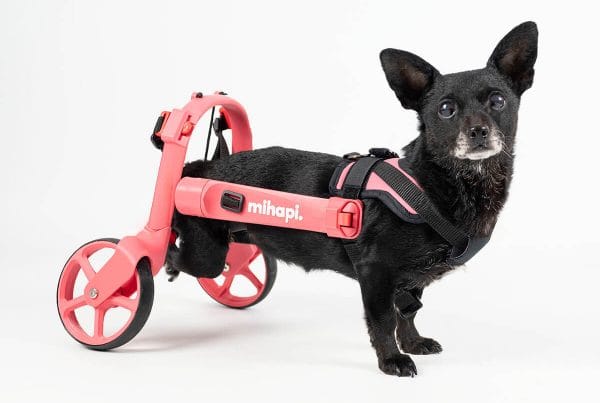
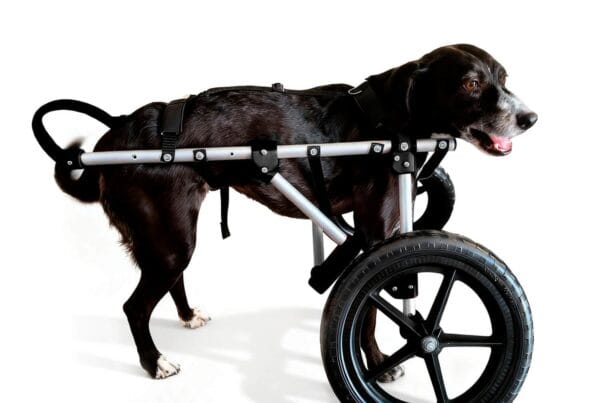
Dog physiotherapy exercises at home work the muscles and nervous system from within. However, in many cases during phases of greater weakness, the dog also needs external support to move safely without falling or injuring itself.
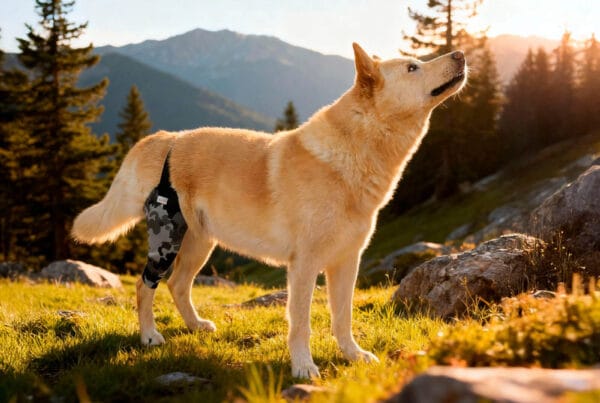
Harnesses and support bands for the hind limbs allow the owner to assist movement without fully carrying the dog, creating the framework necessary for active work. They are the natural complement to the exercises described in this article: while exercise builds strength, support protects the process.
If your dog has difficulty moving independently, check our guide on solutions for hind leg weakness in dogs, where you will find information about specific support options depending on the severity of the condition.
Signs of progress and when to stop exercising
A well-applied home physiotherapy protocol usually produces observable improvements within 2 to 4 weeks. Positive signs include:
- Greater stability when standing up from the ground
- Reduced dragging or stumbling of the hind paws
- Greater confidence when walking on different surfaces
- Improved ability to maintain balance for longer
However, there are situations where you should stop the exercises and consult a veterinarian:
- The dog vocalizes or consistently refuses the exercise
- Swelling or heat appears in a joint after the sessions
- A fall occurs with possible spinal impact
- Motor function worsens instead of improving
Home physiotherapy is effective and safe when applied with proper guidance and gradual progression. Don’t look for quick results: daily consistency always matters more than occasional intensity.
Frequently asked questions about dog physiotherapy at home
Can I perform these exercises without veterinary supervision?
The exercises described in this article are basic to intermediate level and generally safe for dogs with non-acute functional weakness. Even so, it is always advisable for a veterinarian or veterinary physiotherapist to validate the protocol before starting, especially if the dog has recently undergone surgery or has a diagnosed neurological condition.
How many times per week should I perform physiotherapy at home with my dog?
Ideally, work 5 to 7 days per week with short sessions of 10 to 15 minutes. Consistency is more important than duration. One rest day per week allows muscle recovery without interrupting the neuroplasticity process.
At what age can puppies start these exercises?
In normally developing puppies, gentle proprioceptive stimuli can be introduced from 8–10 weeks of age. In puppies with swimmer syndrome or other developmental alterations, the protocol should always be supervised by a professional from the beginning.
Are dog physiotherapy exercises at home useful for large breeds with hip dysplasia?
Yes, with some nuances. Large breeds with hip dysplasia particularly benefit from water exercises, low-impact ramps and controlled sit-to-stand movements. In these cases it is essential to avoid repeated joint impact and combine exercise with adequate support during movement.
Is there a difference between passive and active physiotherapy for the hind limbs?
Yes. Passive physiotherapy —massage, joint mobilization, heat— is performed by the therapist without voluntary muscle effort from the dog. Active physiotherapy, such as the exercises described in this article, involves real muscle contraction from the animal. Both complement each other and together provide the best results in most rehabilitation protocols.
Conclusion: movement as medicine
Dog physiotherapy exercises at home are one of the most cost-effective and accessible interventions for any owner who wants to actively contribute to their dog’s recovery. Ramps, cavaletti, unstable surfaces and functional exercises like sit-to-stand deeply work the muscles and nervous system, addressing the problem at its root.
When combined with appropriate supports and veterinary follow-up, the results are significantly better than passive rest alone. Your consistency, presence and understanding of these techniques are part of your dog’s treatment.
If you want to better understand the origin of hind limb weakness and explore available solutions, visit our complete guide on hind leg weakness in dogs and discover how we can support you at every stage of the process.